

6 min read · Last updated October 26, 2026
- Homeowners, not the utility, generally own and are responsible for the water and sewer lines running from the house to the street, which is why two separate products exist to cover a failure in that line.
- A combined water-and-sewer utility protection plan in Wilmington, Delaware runs $8.49 a month and covers up to $10,000 per water-line occurrence and $12,000 per sewer-line occurrence, with no stated deductible or annual cap.
- A homeowners insurance service line endorsement, confirmed on a filed Homeowners of America form, carries a $10,000 total limit of liability with a $500 deductible per claim.
- The two products can overlap on the exact same pipe. Before you buy either one, find out whether your existing homeowners policy already carries this endorsement.
A utility-sponsored monthly protection plan and a homeowners insurance service line coverage endorsement both pay for a break in the water or sewer line running from your house to the street, but they price the risk differently. A utility plan can run as low as $8.49 a month combined with no deductible, while an insurance endorsement commonly caps out at a $10,000 total limit with a $500 deductible per claim.
In this article
- Who actually owns the pipe between your house and the street
- The utility’s monthly plan, priced out
- The insurance company’s service line coverage, priced out
- A $9,000 repair, two ways
- Frequently asked questions
Who actually owns the pipe between your house and the street
Most homeowners assume the city or the water utility owns every foot of pipe outside the house. In most service areas, that is wrong. The utility typically owns only the main line running under the street.
You, the homeowner, generally own and are responsible for maintaining the service line that connects your house to that main, including the section running under your own yard and under the street right-of-way in front of it.
That ownership boundary is exactly why two separate, competing products exist. Neither the utility nor your insurer is required to cover a line you own and are responsible for, so both offer you the option to pay for protection against it failing. This is a distinct product from sump pump and water backup coverage, which pays for water entering the house, not for the buried pipe itself.
The exact boundary line varies by city and utility, so do not assume your situation matches a neighbor’s. Some utilities own the line up to your property line, others only up to the water meter at the curb, and your own service agreement or municipal code will say which applies to your address.
The utility’s monthly plan, priced out
In Wilmington, Delaware, the city’s water utility partners with a third-party administrator, American Water Resources, to offer residents an optional protection plan, separate from the city’s own water and sewer bill. The water-line-only plan costs $3.99 a month and covers up to $10,000 per occurrence. The sewer-line-only plan costs $5.99 a month and covers up to $12,000 per occurrence.
The combined plan covering both lines costs $8.49 a month, with those same two limits applying separately to each line, and no stated annual cap on the number of claims.
These plans are optional, administered by a private company, and separate from your actual water and sewer utility service. Pricing and limits vary by city and provider, so confirm the exact numbers for your own address before you enroll.
The insurance company’s service line coverage, priced out
A homeowners insurance service line coverage endorsement works differently. Rather than a flat monthly fee, it is added as a line item to your existing homeowners policy, and it typically carries both a coverage limit and a deductible.
On a filed underwriting guideline from Homeowners of America, the service line coverage endorsement carries a total limit of liability of $10,000, with a $500 deductible applying per claim. Progressive’s own consumer guidance describes a similar $10,000 figure as a common limit for this kind of add-on, though your specific carrier’s number can run higher or lower.
Ask your agent for your policy’s exact limit and deductible rather than assuming the figures above apply to your carrier.
A $9,000 repair, two ways
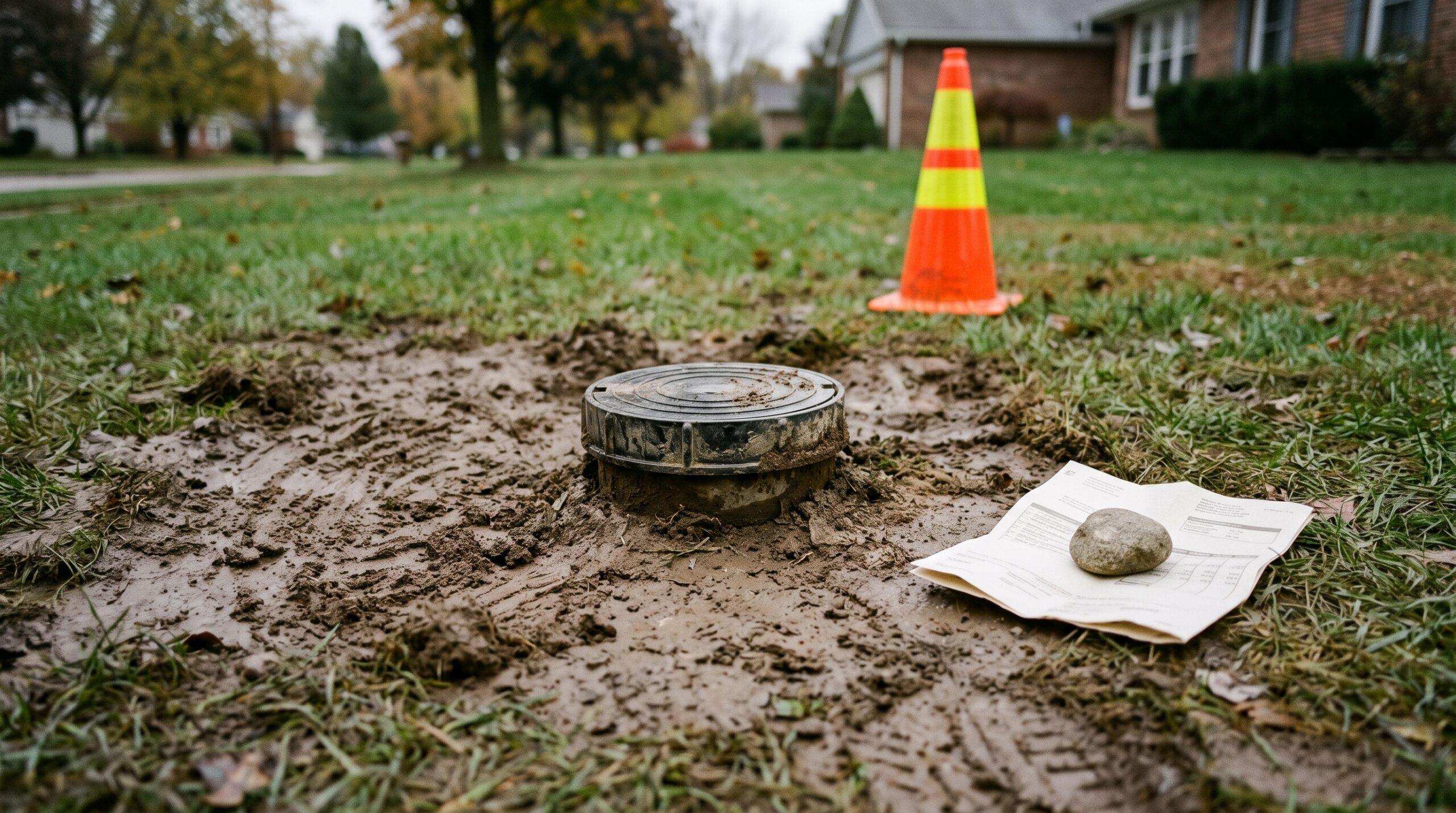
Say your sewer lateral needs a repair quoted at $9,000, the kind of mid-size job covered in detail in our guide to sewer line repair versus replacement, not a full line replacement.
Under the Wilmington-style combined utility plan, that repair sits under the $12,000 sewer-line limit, with no deductible stated on the plan’s own terms. Your out-of-pocket cost for the repair itself is $0, on top of the $101.88 a year you have already paid in monthly fees.
Under the Homeowners of America-style insurance endorsement, that same $9,000 repair sits under the $10,000 total limit of liability, but the $500 deductible applies first. The insurer pays $8,500. You pay $500 out of pocket, plus whatever your policy already costs with the endorsement folded in.
That $10,000 total limit is a separate number from your dwelling coverage limit on the house itself, so raising one does not touch the other.
| Feature | Utility service-line plan | Insurance endorsement |
|---|---|---|
| Who sells it | A third-party administrator under agreement with your water utility | Your homeowners insurance carrier |
| How it is priced | Flat monthly fee ($8.49/mo combined, Wilmington, Delaware example) | Added into your annual policy premium, no separate monthly bill |
| Coverage limit | $10,000 water / $12,000 sewer per occurrence, no stated annual cap | $10,000 total limit of liability (confirmed filed form example) |
| Deductible | None stated on the plan’s own terms | $500 per claim (confirmed filed form example) |
| Best for | A homeowner who wants a predictable flat monthly cost and no deductible | A homeowner who already carries a strong policy and prefers one line item over a separate bill |
Frequently asked questions
Can I have both the utility plan and the insurance endorsement at the same time?
Yes, nothing stops you from carrying both, but you would be paying twice for overlapping protection on the same pipe. Check your existing homeowners policy for a service line endorsement before you add a separate utility plan.
Does either plan cover a line that fails because of old age or wear?
Both products are generally built to cover a sudden, accidental failure, not a line that is simply old or was already failing before you enrolled. Read your specific plan’s or endorsement’s terms for its exact language on pre-existing conditions.
What is a service line, specifically?
It is the buried pipe connecting your house to the public water main or sewer main, running under your yard and often under the street right-of-way in front of your home. It does not include the pipes inside your house.
Does my homeowners insurance already include this without an endorsement?
Most standard homeowners policies exclude buried utility line damage unless you add this endorsement specifically. Call your agent and ask directly whether your policy already carries it, since it is easy to assume you are covered when you are not.
Is a utility-sponsored protection plan the same thing as my actual water and sewer service?
No. These plans are optional products sold by a separate, third-party administrator, not your water bill itself. You can decline the plan entirely and your water and sewer service continues unaffected.