
7 min read · Last updated November 16, 2026
- Connecticut’s own insurance regulator puts it plainly: ice-dam-caused interior or exterior damage is “generally covered,” but “many policies do not pay for ice dam removal.”
- The average homeowners insurance claim for water damage and freezing paid out $20,062 in 2023, per the Insurance Information Institute’s own data on U.S. claims.
- The U.S. Department of Energy’s own guide to durable attics names ice dams directly as a sign that warm air is leaking into your attic, not a roofing defect.
- Cold-climate zones need R-49 to R-60 of attic insulation, per the Department of Energy and ENERGY STAR’s own R-value tables. Most ice-dam-prone attics fall well short of that.
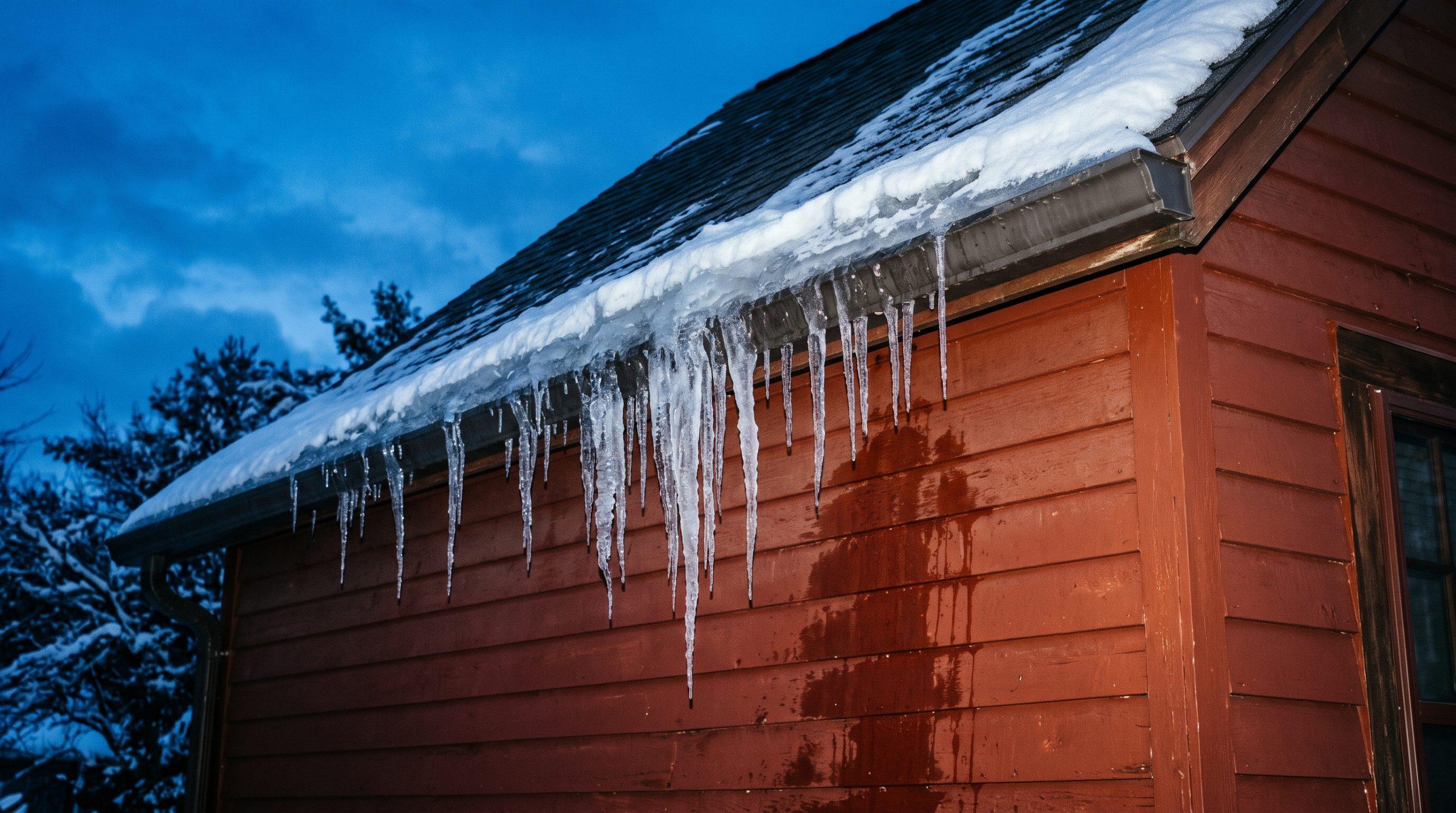
Your homeowners policy usually covers the water an ice dam lets into your ceiling, an average claim of $20,062 for water damage and freezing, but most policies will not pay the separate bill to remove the ice dam itself. An ice dam on your roof rarely becomes an insurance claim by itself; the water it lets into your ceiling does, and your policy treats those as two separate costs with two separate answers.
In this article
- What your policy actually pays for
- What it almost never pays for
- The dollar math on a real ice dam claim
- Why the problem is in your attic, not on your roof
- Frequently asked questions
What homeowners insurance pays for after ice dams
Connecticut’s Insurance Department answers this directly in its own consumer guidance on winter claims: “Interior or exterior damage caused by an ice dam on a roof is generally covered.” That is the plain-English version of a standard homeowners policy’s coverage for water damage that counts as sudden and accidental, meaning it happened at a specific point in time rather than building up slowly from neglect.
In practice, that covers the part homeowners actually call about. If melted water backs up behind an ice ridge, slides under your shingles, and drips through your ceiling or down an exterior wall, the drywall repair, repainting, and any ruined insulation or flooring usually fall under your dwelling coverage, the part of your policy that pays to repair the structure itself. Your policy’s “personal property” coverage can also apply if the same leak ruins a rug, furniture, or boxes stored nearby.
What it almost never pays for
That same Connecticut guidance adds the catch in the very next sentence: “however many policies do not pay for ice dam removal.” That is the cost of a contractor steaming, raking, or chipping the ice off your roof before it causes more damage, and most standard policies treat it as maintenance, the kind of upkeep you are expected to handle yourself, not a covered loss.
Gutter damage follows a similar split. A gutter that tears loose because an ice dam dumped its full weight onto it in one afternoon can read as sudden damage. A gutter that has slowly warped and pulled away from the fascia over several winters of freeze-thaw cycles reads as wear and tear, and insurers lean toward that second explanation unless you can show the damage happened all at once.
An aging roof draws the same scrutiny at renewal time: the same wear-and-tear signals that worry an underwriter when your roof turns 15 are what make an adjuster read a borderline ice dam claim as neglect rather than a sudden loss.
The dollar math on a real ice dam claim
That split looks like this with real numbers. The Insurance Information Institute’s own tracking of U.S. homeowners claims puts the average payout for the “water damage and freezing” category at $20,062 in 2023, the most recent year in its published data, on a claim frequency of 5.33 claims per 100 insured homes that year.
Picture a homeowner named Renata whose ceiling leak from a backed-up ice dam lines up closely with that average. Say her policy carries a $1,000 deductible. Her insurer’s check for the interior repair comes to roughly $19,062 after that deductible, covering the drywall, paint, and ruined insulation above her bedroom.
The separate call to a crew to steam the ice dam off her roof before it causes a second leak, however, is a bill she pays entirely on her own. Removal sits outside what her policy covers in the first place.
That gap is the real reason the removal question matters more than the water-damage question. The water damage is the larger dollar figure, but it is also the one your insurer is likely to pay. The removal bill is smaller, but every dollar of it lands on you.

Why the problem is in your attic, not on your roof
The U.S. Department of Energy’s (DOE) own guide to durable attics lists “ice dams in roof gutters causing water to seep under shingles and leak into the house” as one of the direct signs that moisture, and the warm air carrying it, is getting into your attic. That is a diagnosis about your attic, not a complaint about your roof.
Heat escaping from your living space into the attic melts the snow directly over your warmer rooms. That meltwater runs down to the unheated eave, where it refreezes and builds the dam.
DOE’s fix is not a better roof. It is sealing the air gaps between your top floor and your attic, around recessed lights, the attic hatch, and duct and plumbing penetrations, then adding enough insulation that your attic floor stays close to outdoor temperature all winter.
How much insulation is enough depends on where you live. DOE and ENERGY STAR, the federal energy-efficiency program, publish matching R-value tables calling for R-49 to R-60 of attic insulation across most cold and very cold climate zones, the range covering the northern two-thirds of the country, for an attic that currently has none. A thin, uneven layer of old insulation from the 1990s falls well short of that target in most of these homes, which is exactly the gap that keeps producing ice dams winter after winter.
| Ice dam cost | Typically covered? |
|---|---|
| Interior water damage to drywall, paint, flooring, ruined insulation | Usually yes, as sudden and accidental damage to the dwelling |
| Damaged personal property (furniture, rugs, stored items) hit by the same leak | Usually yes, under personal property coverage |
| Professional removal of the ice dam itself | Usually no, treated as maintenance |
| Gutter damage from one sudden, heavy ice load | Sometimes, if you can show it happened suddenly |
| Gutter or roof wear from repeated freeze-thaw cycles over several winters | Usually no, treated as wear and tear |
| Mold from a leak left unaddressed for weeks | Often limited or excluded, varies heavily by policy |
Frequently asked questions
Does homeowners insurance cover ice dams? It covers the water damage an ice dam causes inside your home, like a stained ceiling or soaked insulation, when that damage happens suddenly rather than building up slowly. Connecticut’s insurance regulator describes this kind of damage as “generally covered.” The ice dam itself is a separate question with a different answer.
Will my insurance pay to remove an ice dam from my roof? Usually not. Most standard policies treat ice dam removal as routine maintenance you are responsible for, the same way they treat gutter cleaning. Connecticut’s own consumer guidance states this directly: many policies simply do not pay for removal, even when they do pay for the water damage the dam caused.
What does “sudden and accidental” mean for an ice dam claim? It means the damage has a clear starting point, like a specific leak that appeared this week, rather than developing gradually over seasons. A burst water line under an ice dam that soaks your ceiling overnight usually qualifies. A roof that has slowly deteriorated from years of ice buildup usually does not.
Does gutter damage from an ice dam get covered? Sometimes. A gutter torn loose by one especially heavy ice load can count as sudden damage. A gutter that has warped and pulled away gradually over several winters reads as ordinary wear and tear, which most policies exclude, so document any sudden gutter failure with photos right away.
What actually stops ice dams from forming? Sealing the air leaks between your living space and your attic, then adding enough insulation to keep the attic floor cold all winter. The Department of Energy identifies ice dams as a sign of attic air leakage, not a roofing problem, and recommends air sealing plus insulation as the real fix rather than heat tape or roof raking.
Will my claim get denied if I knew about the ice dam and didn’t act? It can be. Insurers distinguish a sudden loss from one that follows from your own neglect, such as watching the same dam grow for weeks without calling anyone. Acting reasonably once you spot a dam and keeping records of when you noticed it and what you did strengthens a claim if water does get in.