
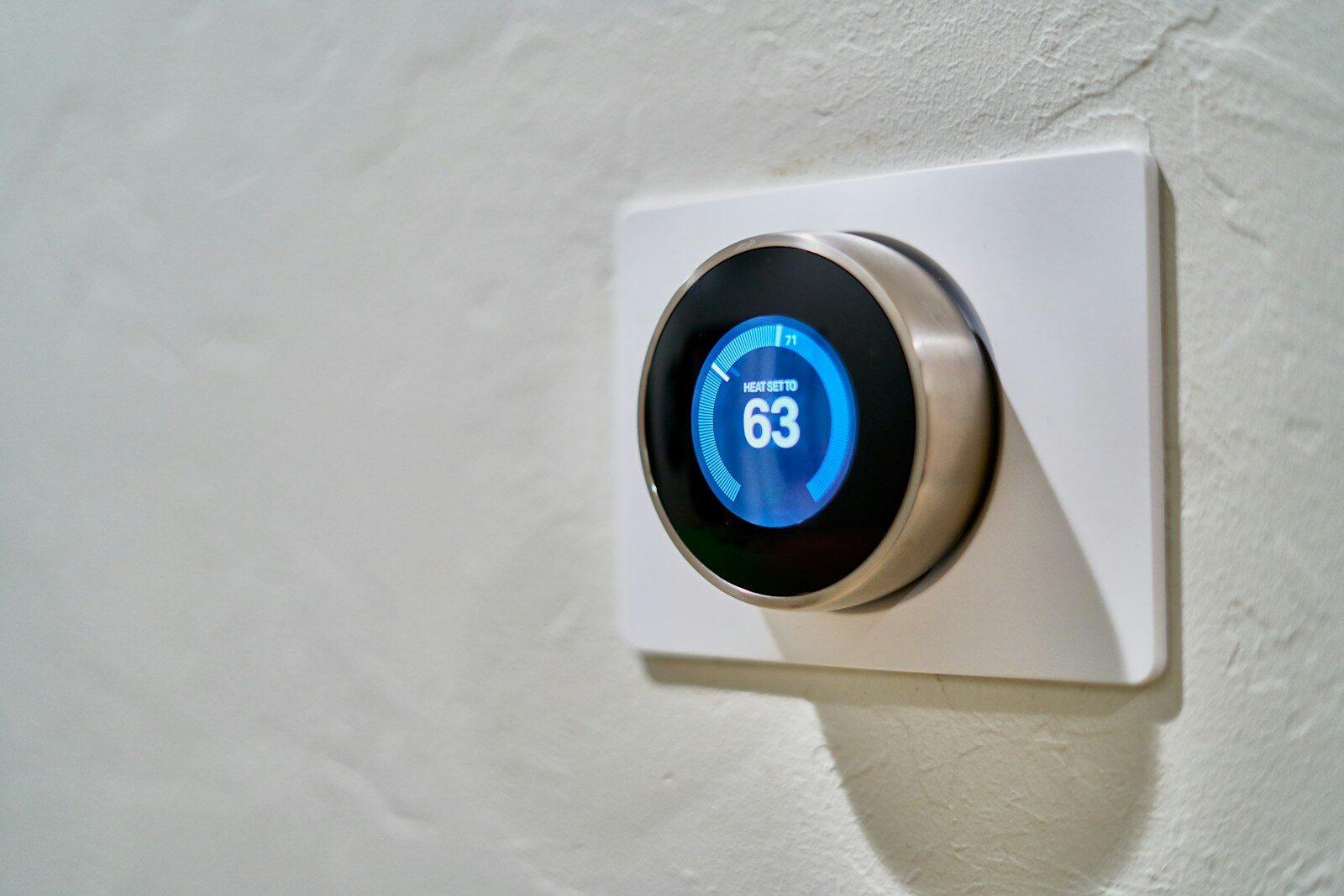
Heating and cooling can account for a significant share of a home’s energy use, making the thermostat an important place to look for savings.
Smart thermostats can automatically adjust temperatures around your schedule, reduce unnecessary heating or cooling, and give you more control over energy use without sacrificing comfort.
This article explains how they work, why they are effective, and what benefits they deliver.
Learning Habits Improves Comfort
Smart thermostats adjust temperatures based on daily routines. They learn when you wake up, leave for work, and return home.
This learning process creates schedules that match your lifestyle.
For example, the thermostat lowers heating or cooling when you are away and restores comfort before you return. The positive side is improved convenience and reduced waste. The negative side is that learning requires time and consistent use.
Savings Reports Show Real Results
Utility studies confirm that smart thermostats reduce energy bills. Homeowners report savings between ten and twenty percent annually.
For example, a household spending $2,000 on energy may save $200 to $400 each year. These savings accumulate over time and offset the initial purchase cost.
The positive aspect is measurable financial relief. The negative aspect is that savings vary depending on usage patterns and climate.
| Smart thermostat factor | What it changes | Reader takeaway |
|---|---|---|
| ENERGY STAR-certified smart thermostat | ENERGY STAR’s certification standard requires qualifying models to demonstrate at least an 8% reduction in heating-season runtime (a lower-confidence-bound national average), not a guaranteed dollar savings figure. | Treat 8% as a verified certification floor, not a promised savings rate — actual utility bill impact still depends on climate, usage, and local energy rates. |
| High heating or cooling usage | Savings can be greater when climate, comfort settings, occupancy, or HVAC equipment create more opportunity to reduce runtime. | The best payback usually comes from homes with meaningful heating or cooling demand. |
| Occupancy sensing and schedules | The thermostat can reduce heating or cooling when no one is home and restore comfort before return. | The device only saves money if the automatic schedule is allowed to adjust temperatures. |
| Remote control | Phone access lets homeowners correct settings after leaving the house or while traveling. | This helps avoid paying for comfort settings when the home is empty. |
| Utility rebates | Many rebate programs lower upfront cost when a qualifying model is installed. | Check local utility and ENERGY STAR rebate tools before buying, because eligibility varies by location. |
Rebates Available Reduce Costs
Government programs and utility companies offer rebates for smart thermostat purchases. These incentives lower upfront costs and encourage adoption.
For example, a $150 thermostat may qualify for a $50 rebate, reducing the net expense to $100. Some programs provide free devices to households that meet eligibility requirements.
The positive side is affordability and accessibility. The negative side is that rebates require paperwork and may have limited availability.
A smart thermostat is one of the specific upgrades ENERGY STAR’s home-saving resources track for real savings. And, if a full efficiency retrofit is the bigger goal, DOE’s Weatherization Assistance Program page explains what income-qualified households can get covered.
How Smart Thermostats Save Energy
Smart thermostats connect with other devices such as smart lighting, appliances, and security systems. Integration allows homeowners to manage energy use across the entire household.
For example, lights turn off when the thermostat detects no one is home. Appliances adjust cycles to reduce energy demand during peak hours.
The positive aspect is comprehensive efficiency. The negative aspect is that integration requires compatible devices and reliable internet connections.
Additionally, smart thermostats reduce energy consumption and lower carbon footprints. Communities benefit when households adopt sustainable practices.
For example, reduced demand during peak hours decreases strain on power grids and lowers emissions.
The positive side is environmental protection and community resilience. The negative side is that individual impact may seem small, but collective adoption creates meaningful change.
Understanding Technology and Adoption Challenges
Smart thermostats rely on sensors, algorithms, and connectivity to deliver results. Sensors detect occupancy and adjust temperatures accordingly. Algorithms analyze patterns to predict future needs. Connectivity allows remote control through smartphones and integration with other devices.
The positive aspect is advanced technology that simplifies energy management. The negative aspect is that homeowners must adapt to new systems. Some users struggle with setup or resist changing habits. Education and support from manufacturers and utility companies help overcome these challenges.
Long-Term Benefits for Homeowners
Smart thermostats provide more than immediate savings. They extend the lifespan of HVAC systems by reducing strain. They improve indoor comfort by maintaining consistent temperatures. They support sustainability goals by lowering emissions.
For example, a household that adopts smart thermostats and energy-efficient appliances reduces utility bills, improves comfort, and contributes to environmental protection. The positive side is a balanced approach to financial and ecological responsibility. The negative side is that benefits require consistent use and occasional updates.
Comparing Smart Thermostats to Traditional Models
Traditional thermostats require manual adjustments and lack advanced features. Smart thermostats automate processes and provide detailed energy reports.
The positive aspect of traditional models is simplicity and low cost. The negative aspect is limited efficiency and no data tracking. Smart thermostats cost more initially but deliver savings and insights that traditional models cannot match.
Consider a family living in a region with hot summers and cold winters. A smart thermostat adjusts cooling during the day when the house is empty and restores comfort before the family returns.
During winter, it lowers heating at night and raises it in the morning. Over time, the family saves hundreds of dollars and reduces energy waste.
Another example involves a homeowner who integrates a smart thermostat with solar panels. The system optimizes energy use by storing excess power and reducing reliance on the grid. This integration lowers bills and supports sustainability.
Smart thermostats are practical tools that reduce energy bills and improve comfort. Learning habits, delivering savings, offering rebates, integrating with devices, supporting sustainability, explaining technology, highlighting long-term benefits, comparing traditional models, and providing real-world examples each demonstrate value.
Homeowners who adopt smart thermostats gain financial relief and contribute to environmental protection. Consistent use ensures lasting results and strengthens household resilience.
Frequently Asked Questions
How much can a smart thermostat lower my energy bill?
Utility studies show smart thermostats reduce energy bills by ten to twenty percent annually. A household spending $2,000 a year on energy saves $200 to $400.
The exact savings depend on usage patterns, climate, and how aggressively the schedule is configured.
Are smart thermostats worth the cost?
A $150 thermostat that saves $300 a year pays for itself in under a year. Many utility programs offer $50 to $100 rebates that cut the net cost further.
For households with consistent schedules, the math is straightforward.
Do smart thermostats actually learn my schedule?
Yes, smart thermostats track when you wake, leave, and return home, then build schedules that match the household rhythm. The learning takes a few weeks of consistent use to settle.
Manual overrides during that period confuse the algorithm. Let the device run for a month before judging its accuracy.
Are smart thermostat rebates available?
Many utilities and state programs offer rebates of $50 to $100 toward smart thermostat purchases. Some programs provide free devices to qualifying households.
Check your utility’s website before buying, and confirm the model on the eligible list.
Do smart thermostats integrate with other devices?
Yes. Smart thermostats connect with smart lighting, appliances, and security systems through Wi-Fi or hubs like HomeKit, Alexa, or Google Home.
Integration lets lights turn off when the thermostat detects no one home, which compounds the energy savings. Compatibility is the main thing to verify before purchase.