
Insulation is one of those home features that works best when you never think about it. A well-insulated home stays warmer in winter and cooler in summer without constant pressure on the heating and cooling system. When insulation is missing, inadequate, or installed incorrectly, the HVAC system compensates by running longer, working harder, and costing more. The US Department of Energy estimates that proper insulation reduces heating and cooling costs by up to twenty percent.
Knowing which types of insulation deliver the best results for each application helps you make decisions that pay off for decades.
Understanding R-Value
Every insulation product is rated by its R-value, which measures thermal resistance. Higher R-values indicate better resistance to heat flow and stronger insulating performance. The required R-value for a given area of your home depends on your climate zone and the specific location, whether it is an attic, exterior wall, basement, or crawl space.
The Department of Energy publishes R-value recommendations by climate zone. Homeowners in colder climates need higher R-values, particularly in the attic, which is where the greatest volume of heat escapes in winter.
Insulation upgrades are exactly the kind of project ENERGY STAR’s home-saving resources rank by real payback, and if income makes a full upgrade tight, DOE’s Weatherization Assistance Program page explains who qualifies for help covering it.
Blown-In Insulation for Attics
Blown-in insulation, available in loose-fill fiberglass or cellulose forms, is one of the most cost-effective ways to bring an underinsulated attic up to the recommended R-value. It fills irregular spaces and surrounds obstructions like pipes and wiring more completely than batts can. Professional installation uses a blowing machine that distributes the material evenly across the attic floor to a measured depth.
Cellulose blown-in insulation is made primarily from recycled paper and has a higher R-value per inch than fiberglass. It is also treated for fire resistance and performs well at blocking air movement. Fiberglass blown-in is lighter, does not settle as much over time, and is resistant to moisture damage. Both are strong performers in attic applications.
Batt Insulation for Walls and Floors
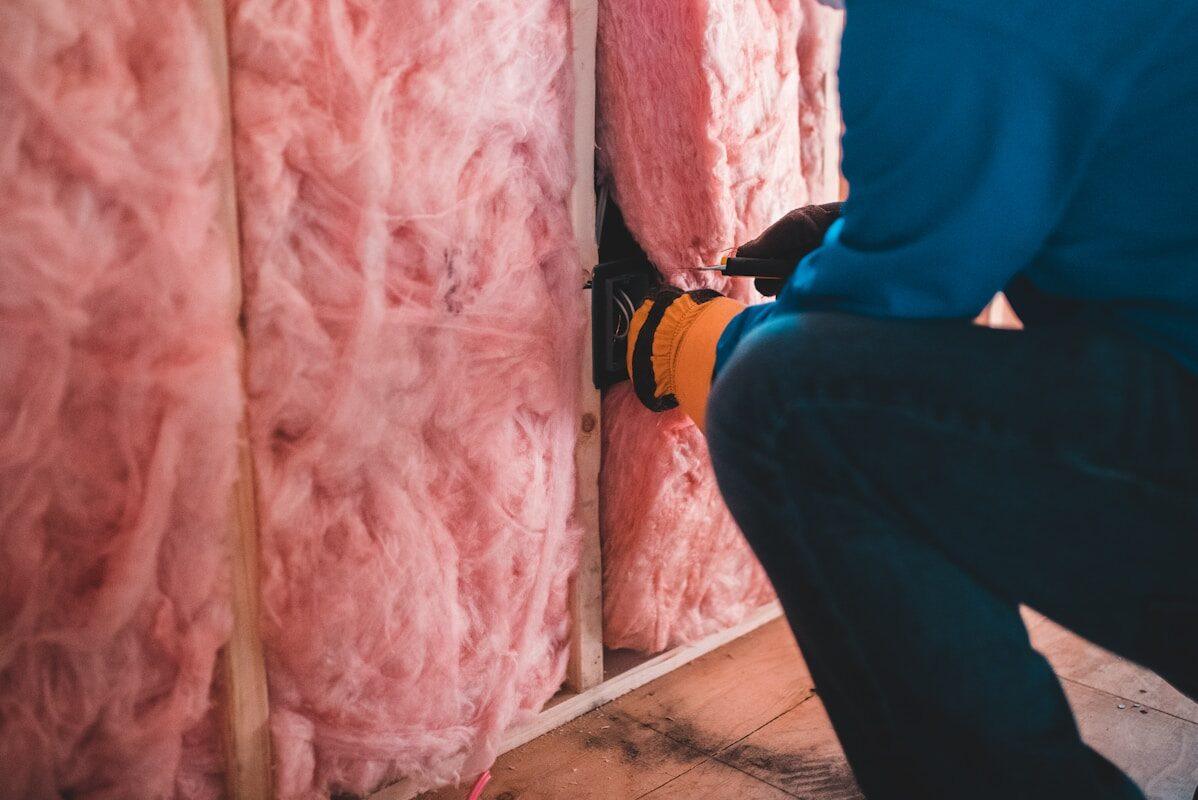
Fiberglass batts are the most widely recognized insulation product, sold in rolls or pre-cut sections sized to fit standard stud and joist spacing. They work well in open wall cavities, between floor joists, and in attic knee walls. Mineral wool batts, sometimes called rock wool, offer a higher R-value per inch than fiberglass, better fire resistance, and improved sound dampening. They cost more but outperform standard fiberglass in most categories.
Proper installation matters as much as the R-value rating. Batts that are compressed, cut too short, or left with gaps around the edges perform significantly below their rated value. Fitting batts correctly with no voids and no compression is worth the extra care during installation.
Spray Foam for Air Sealing and Insulation
Spray polyurethane foam (SPF) comes in two forms. Open-cell foam is softer and more flexible, with a lower R-value per inch but excellent air sealing properties. Closed-cell foam is denser, has a higher R-value per inch, and acts as a vapor barrier in addition to an air barrier. Closed-cell foam applied to a rim joist, an uninsulated foundation wall, or the underside of a roof deck delivers some of the highest performance available.
Spray foam is more expensive than blown-in or batt alternatives and typically requires professional installation. Its value lies in its ability to seal and insulate simultaneously, addressing two sources of energy loss with one product.
Rigid Foam Boards for Specific Applications
Rigid foam insulation panels are used where thickness is limited but high R-value is needed. Common applications include insulating basement walls from the interior, adding continuous insulation to exterior walls, and covering the interior of garage doors. Extruded polystyrene (XPS) and polyisocyanurate panels offer the highest R-values per inch among rigid foam options.
Rigid foam panels are easy to cut with a utility knife and straightedge, making them accessible for do-it-yourself installation in straightforward applications. Covering exposed rigid foam with drywall or another thermal barrier is required by code in most jurisdictions when used in living spaces.
The highest-return insulation projects for most homeowners are adding insulation to the attic and sealing the rim joist with spray foam. These two areas are responsible for the largest share of heat loss in a typical home and produce the most noticeable improvement in comfort and energy costs.
Frequently Asked Questions
How much can insulation reduce my heating and cooling costs?
The US Department of Energy estimates that proper insulation reduces heating and cooling costs by up to twenty percent. The savings come from the HVAC system running less often because the insulated envelope holds temperature longer. Attic upgrades typically deliver the largest measurable impact.
What is R-value and what should mine be?
R-value measures thermal resistance, and higher numbers indicate better insulating performance. The required R-value depends on your climate zone and the specific area of the home. Colder climates need higher R-values, particularly in the attic where the greatest volume of heat escapes in winter. The Department of Energy publishes R-value recommendations by climate zone.
Which insulation type works best in attics?
Blown-in insulation, available in loose-fill fiberglass or cellulose, is one of the most cost-effective ways to bring an underinsulated attic up to recommended R-value. It fills irregular spaces and surrounds pipes and wiring more completely than batts. Cellulose has a slightly higher R-value per inch; fiberglass settles less over time.
Is spray foam worth the extra cost?
Spray foam delivers air sealing and insulation in one application, which makes it strong for rim joists, irregular cavities, and tight retrofit conditions. It costs more per square foot than batts or blown-in, so reserve it for spots where the air-sealing performance justifies the price. Whole-attic spray foam jobs are a major commitment with long-term implications.
How do I know if my insulation is failing?
Uneven temperatures between rooms, ice dams on the roof in winter, and HVAC bills that climb without a change in habits all suggest the insulation envelope is leaking. An energy audit identifies exactly where the heat is moving. Adding insulation to an underinsulated attic is usually the highest-return single upgrade.