

6 min read · Last updated July 6, 2026
- Finishing a basement recoups roughly 70% to 75% of its cost, higher than most room additions at around 50% to 60%.
- A basement finish runs about $30 to $75 per square foot. A room addition runs $200 to $500-plus per square foot.
- The catch: a finished basement usually does not count toward your home’s official above-grade square footage, while an addition does.
- Choose the basement for cheap usable space, the addition when you need another bedroom or bath that shows up in the comps.
In this article
- The recoup rate: basement wins on paper
- The square-footage catch appraisers care about
- Cost per dollar of value: the head-to-head
- Which one to choose for your home
- FAQ
When you’re looking to add usable space to your home, finishing the basement and building a room addition can both seem like smart investments… But they can affect your home’s value in very different ways.
A finished basement can provide more living space at a lower cost, while a room addition can increase your home’s official above-grade square footage and potentially add bedrooms or bathrooms.
Understanding these differences can help you decide which project makes the most sense for your budget, your family, and your long-term plans for the home.
Take the Nguyens, for example. They had $60,000 and a decision.
Finishing their 900-square-foot basement would cost about $45,000 and give them a family room and an office.
A 300-square-foot bedroom-and-bath addition would eat the entire $60,000 and then some.
Both add space. Only one of them changes the number a future buyer’s appraiser writes down.
A finished basement and a room addition compete for the same buyer expectations. NAR’s research and statistics hub tracks what buyers actually value in your market, and HUD summarizes home-improvement resources worth reviewing before you pick one.
Most homeowners compare these two projects on price and forget the accounting rule underneath them.
Get that rule wrong and you can spend $45,000 improving a home whose listed size never moves.
Here is how the two stack up.
The recoup rate: basement wins on paper
Start with the return numbers. Remodeling magazine’s annual Cost vs. Value report and the National Association of Realtors both track how much of a project’s cost you get back at resale.
A finished basement typically recoups around 70% to 75% of its cost. A room addition usually recoups less, often in the 50% to 60% range, and upscale additions like a large primary suite can dip below 50%.
On recoup percentage alone, the basement is the clear winner.
The reason is cost. A basement already has a floor, walls, and a roof, so finishing it means framing, insulation, drywall, flooring, and wiring inside an existing shell.
An addition means new foundation, new exterior walls, and a new roof, which is why it costs several times more per square foot and returns a smaller share.
The square-footage catch appraisers care about
However, appraisers generally do not count below-grade space in a home’s official gross living area, even when it is beautifully finished.
In plain terms:
- If your home is listed as 1,800 square feet and you finish a 900-square-foot basement…
- Most appraisers will still list the home as 1,800 square feet of above-grade living area.
- The finished basement will be noted separately and valued at a lower rate.
- Buyers and comparison tools (“comps”) lean heavily on above-grade square footage, so the finished basement helps, but less than the raw space suggests.
An addition is different. Add a 300-square-foot bedroom above grade and your home’s official living area grows to 2,100 square feet.
That larger number lifts every comp-based estimate, and if the addition creates a bedroom or bathroom the home did not have, the value jump can be larger still, because bed-and-bath counts drive pricing.
Our guide to renovations that do not add value covers the projects where this accounting works against you.
Cost per dollar of value: the head-to-head
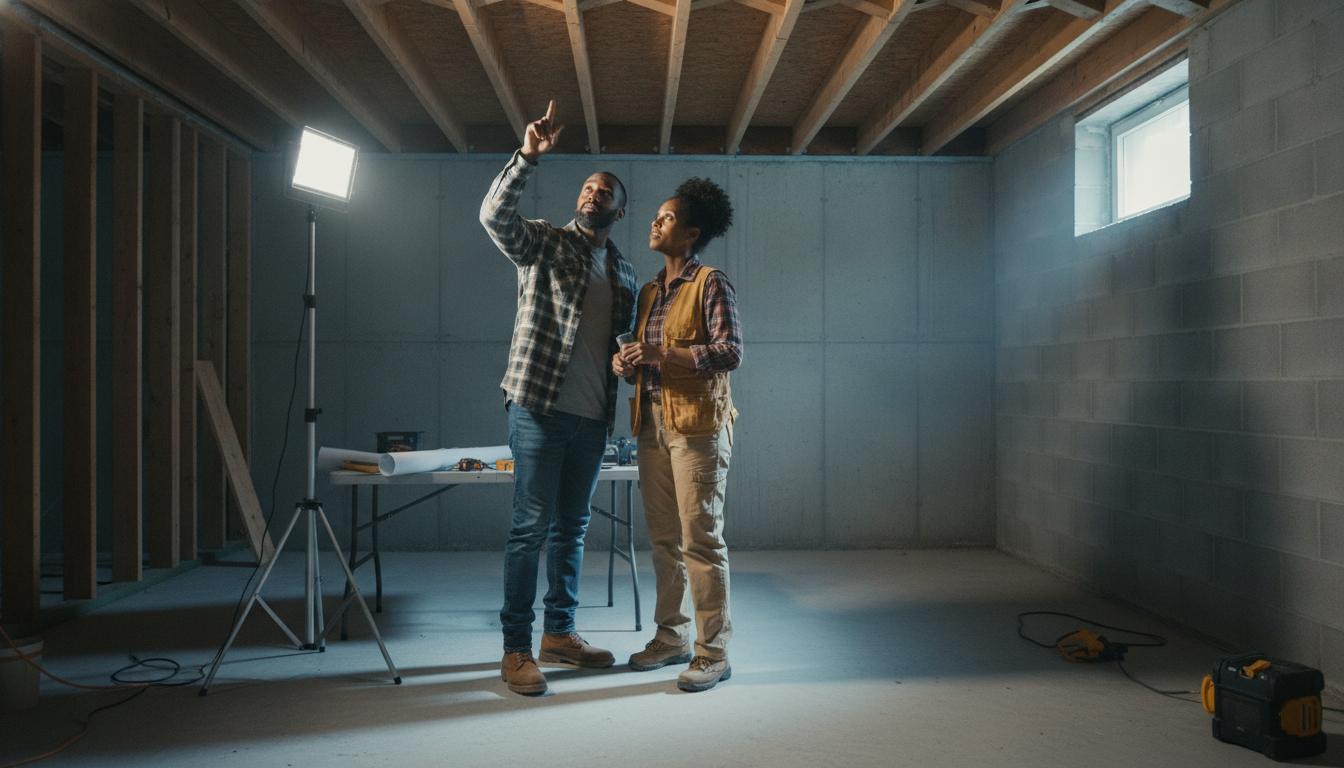
Here’s a quick look with the two projects side by side, focusing on the factors that actually decide the return.
| Factor | Finished basement | Room addition |
|---|---|---|
| Typical cost per square foot | $30 to $75 | $200 to $500+ |
| Cost recouped at resale | ~70% to 75% | ~50% to 60% |
| Adds official above-grade square footage? | No (counted separately, valued lower) | Yes (counts fully) |
| Can add a legal bedroom or bath? | Only with an egress window and permits | Yes, by design |
| Best for | Owners wanting cheap usable living space | Owners needing more listed beds, baths, or size |
The basement wins on cost efficiency and recoup percentage.
The addition wins on absolute value added and on the square-footage and room-count math that appraisers and buyers reward.
Which one is right depends on what your home is short of, not on which has the better return on paper.
Before either project, read the permits most homeowners skip, because an unpermitted finish or addition can erase the value you paid for.
Which one to choose for your home
Choose the finished basement when your home already has enough bedrooms and bathrooms and you simply want more usable space, a rec room, a home gym, an office, at the lowest cost per square foot.
It is also the better play if your budget is tight, since $45,000 finishes a large basement but barely starts an addition.
Choose the addition when your home is short a bedroom or bathroom for its neighborhood, or when the local comps are all larger than your house.
Adding a legal bedroom or a second bathroom in a home that lacks one can move the sale price by far more than its recoup percentage suggests, because it lets your home compete with a whole tier of larger listings.
For a broader ranking of which upgrades pay back, see our guide to budget-friendly renovations that boost home value.
FAQ
Does a finished basement add to my home’s square footage? Usually not in the official sense. Appraisers typically list below-grade space separately from above-grade gross living area and value it at a lower rate. A finished basement adds real usable space and comfort, but it rarely increases the square-footage number buyers and comps rely on.
Which recoups more, a basement or an addition? The basement, on percentage. Finishing a basement recoups roughly 70% to 75% of its cost, while a typical room addition recoups closer to 50% to 60%. The addition can still add more total dollars of value because it costs and adds far more.
Can I add a legal bedroom in my basement? Sometimes, but only if it meets code, which for a bedroom almost always requires an egress window (a window large enough to climb out of in a fire) and proper permits. A basement room without legal egress cannot be marketed as a bedroom, which limits how much value it adds.
Which is cheaper, finishing a basement or building an addition? Finishing a basement is far cheaper, typically $30 to $75 per square foot versus $200 to $500 or more for an addition. The basement reuses the existing foundation, walls, and roof, while an addition requires building all three from scratch.
If I need more bedrooms, which should I build? Usually the addition. It adds above-grade square footage that counts in appraisals and can create a legal bedroom or bath that raises your home’s comp tier. A basement bedroom works only with egress and permits, and even then it is valued below an above-grade room.