

6 min read · Last updated September 7, 2026
- Video of a public-facing driveway or sidewalk is generally legal nationwide. The microphone, not the lens, is where the real legal risk sits.
- Independent real-world testing found Ring’s microphone captures clear, intelligible speech from up to 20 feet away and Arlo’s from up to 30 feet, and both brands record audio automatically by default.
- California, Florida, Washington, Illinois, and Pennsylvania require every party to a conversation to consent before it is recorded, and unauthorized recording is a felony in several of them.
- Nevada and Oregon are commonly miscounted as all-party-consent states. Nevada’s rule applies only to phone calls, and Oregon requires notice, not consent, for an in-person conversation.
In this article
- Video is settled law. Audio is a different question.
- Five states require everyone in the conversation to agree
- Two states aggregator lists commonly get wrong
- What actually happens when this goes to court
- How to keep the camera without the exposure
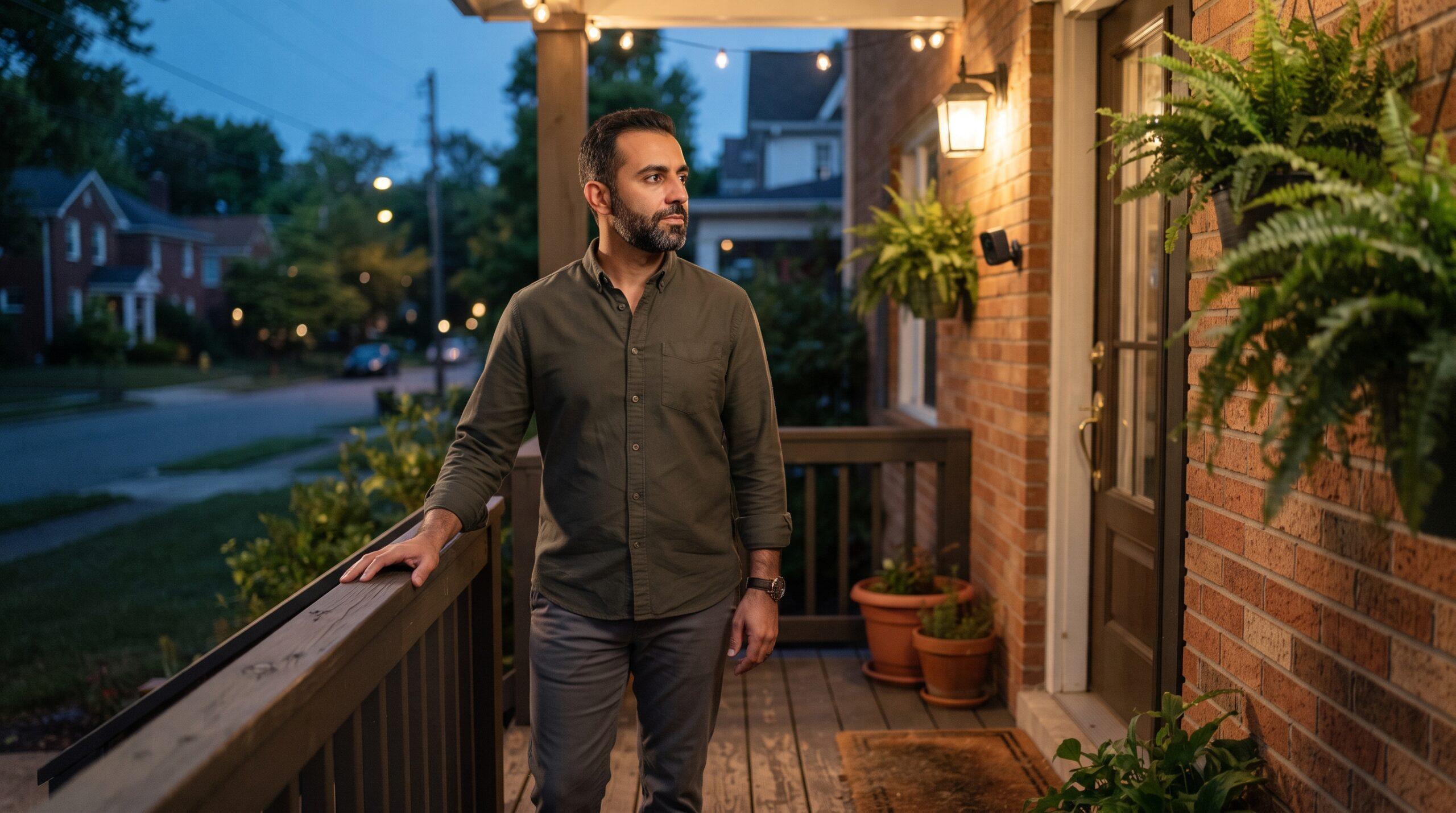
Diego installed a video doorbell above his front door in June and aimed the lens squarely at his own driveway. Independent real-world testing on the same class of device, run by Consumer Reports, found its built-in microphone can pick up clear, intelligible speech from up to 20 feet away, far enough to reach his neighbor’s porch across their shared driveway.
Video is settled law. Audio is a different question.
Recording video of a public-facing area, your own driveway, your porch, the sidewalk out front, is generally legal nationwide. Nobody has a reasonable expectation of privacy standing in a spot any passerby can see. The federal Wiretap Act, 18 U.S.C. (United States Code) § 2511, sets the floor for the audio question instead: it requires the consent of only one party to a conversation before it can be legally recorded, and states are free to set a stricter standard.
That one-party floor is narrower than most homeowners assume. It does not mean a bystander who owns the recording device gets to capture anyone’s conversation freely. It means at least one participant in the conversation itself has to consent. If your doorbell’s microphone catches two other people talking, a delivery driver and a neighbor, say, and neither of them consented, you can still run into a real problem even in a one-party-consent state, because the device owner standing outside the conversation was never the party whose consent counted.
Five states require everyone in the conversation to agree
A smaller group of states go further and require every participant’s consent before any recording is legal, turning an accidental capture into a criminal exposure rather than a gray area.
| State | Statute | What counts as a violation |
|---|---|---|
| California | Penal Code § 632 | Recording a “confidential communication” without consent from everyone in it |
| Florida | Florida Statute § 934.03 | Intercepting an oral communication without consent from every party |
| Washington | Revised Code of Washington (RCW) § 9.73.030 | Recording a private conversation without every participant’s consent, though an audible announcement that recording is happening can itself count as consent |
| Illinois | Illinois Compiled Statutes (ILCS), 720 ILCS 5/14-2 | Recording a private conversation without consent, under the version rewritten after a state supreme court ruling struck the prior law |
| Pennsylvania | 18 Pa. Cons. Stat. § 5703 | Intercepting or recording a conversation without consent from every party |
Two states aggregator lists commonly get wrong
Online lists of all-party-consent states routinely lump in two states that do not actually work that way for a conversation your doorbell overhears.
Nevada requires all-party consent only for recording a phone call, under Nevada Revised Statutes (NRS) § 200.620. An in-person conversation, the kind a doorbell microphone actually picks up on a porch or driveway, falls under a separate statute that only needs one party’s consent, a distinction the Nevada Supreme Court confirmed in a 1998 ruling.
Oregon does not require consent at all for an in-person conversation under Oregon Revised Statutes (ORS) § 165.540. It requires notice, meaning every participant has to be specifically informed that they are being recorded. That is a real, enforceable rule, just a different one than “everyone has to agree first.”
What actually happens when this goes to court
A 2020 New Hampshire case shows how this actually plays out. A neighbor’s video doorbell captured audio of yelling and gunshots during an argument between two brothers in a driveway, and the defense argued the audio violated the state’s all-party-consent wiretapping law. The court ruled the recording admissible, but not because doorbell cameras get a blanket exemption. The judge concluded that speech “exposed to the general public’s naked ear” is not the kind of private conversation the wiretapping law protects, so neither brother had a reasonable expectation of privacy for the law to shield. A quieter, genuinely private conversation on the same porch could have come out the other way.
How to keep the camera without the exposure
Most doorbell cameras let you turn audio recording off, either per clip or entirely, in the app’s settings. The device makers’ own help documentation confirms the toggle exists but does not itself state what the out-of-box default is. It took independent testing from Consumer Reports, not the companies’ own marketing copy, to confirm Ring and Arlo, two of the most common doorbell camera brands, record audio automatically whenever motion triggers a clip, no separate opt-in required. If your microphone’s range reaches past your own porch, turning audio off, or physically repositioning the camera so its lens and mic stay closer to your own property, closes the exposure without giving up the video.
Installing the camera in the first place is generally protected too. Texas Property Code § 202.023 bars a homeowners association (HOA) from banning a security camera on a single-family home outright. Florida works differently for condominiums: Florida Statute § 718.113(2)(a) can require a 75% vote of the association before a camera counts as a material alteration or substantial addition to a shared entryway or common element. Check which rule applies to your property type before you assume either state’s approach is universal.
Frequently asked questions
Is it legal to record video with my doorbell camera if it captures my neighbor’s property?
Generally yes. Recording video of a public-facing area, a driveway, a sidewalk, a shared walkway, is legal nationwide, since nobody has a reasonable expectation of privacy in a space any passerby can see. The audio track is the part with real legal exposure, not the video.
Does my doorbell camera record audio automatically?
Independent testing has found that Ring and Arlo, two of the most common doorbell camera brands, record audio by default alongside video. That same testing found Ring’s microphone picked up clear speech from up to 20 feet away and Arlo’s from up to 30 feet. Most devices let you disable audio recording in the settings, though the manufacturers’ own documentation typically does not state the default.
Which states require everyone’s consent before a conversation can be recorded?
California, Florida, Washington, Illinois, and Pennsylvania all require consent from every party to a conversation before it can legally be recorded, with unauthorized recording a felony in several of them. The federal floor, by contrast, only requires one party’s consent.
Are Nevada and Oregon really all-party-consent states?
Not for an in-person conversation. Nevada’s all-party rule applies only to phone calls; in-person conversations need just one party’s consent. Oregon requires that every participant be notified they are being recorded, which is a notice rule, not a consent rule.
Can my homeowners association (HOA) stop me from installing a security camera?
On a single-family home in Texas, no, state law bars an HOA from banning security cameras outright. In a Florida condominium, installing a camera on a shared entryway can require a 75% vote of the association as a material alteration or substantial addition, so the rule depends on your property type and state.