
6 min read · Last updated August 3, 2026
- North Carolina homeowners took a 7.5% statewide base-rate increase on June 1, 2025 and another 7.5% on June 1, 2026, which compounds to 15.6%.
- Residential reconstruction costs rose 3.2% in the twelve months ending April 2026, after 4.7% the year before, per Verisk’s quarterly analyses.
- A $280,000 dwelling limit set at an April 2024 renewal needs roughly $302,541 today. That is a $22,541 shortfall on a total loss.
- A rate increase is not a coverage increase. Ask your carrier in writing for a fresh replacement-cost estimate, and give it the square footage and finishes.
In this article
- Why the premium and the limit move independently
- The worked shortfall: what a 2024 limit buys today
- What actually triggers a re-run, and how to request one
- The renovations that require you to call
- Frequently asked questions
The Alvarez family’s North Carolina homeowners premium went from $2,000 to $2,311 across two renewals. The dwelling limit on their declarations page read $280,000 both years, the same figure their agent set at the April 2024 renewal. They paid $311 a year more for exactly the same promise.
FEMA’s flood-insurance program publishes its own replacement-cost guidance, which walks through the same rebuild-cost math that drives a dwelling-limit recalculation.
Both halves of that are documented. The North Carolina Department of Insurance settled with the North Carolina Rate Bureau so that “the average statewide base rate will increase by 7.5% on June 1, 2025, and 7.5% on June 1, 2026.” The Rate Bureau had originally asked for 42.2%, with proposed increases as high as 99.4% in some territories. Compounded, the settled increase is 15.6% over two years.
Why the premium and the limit move independently
Your premium and your dwelling limit answer two different questions, and only one gets revisited automatically.
The premium answers what the carrier charges to take your risk. It moves with statewide filings, catastrophe losses, and reinsurance costs. None of that is about your specific house.
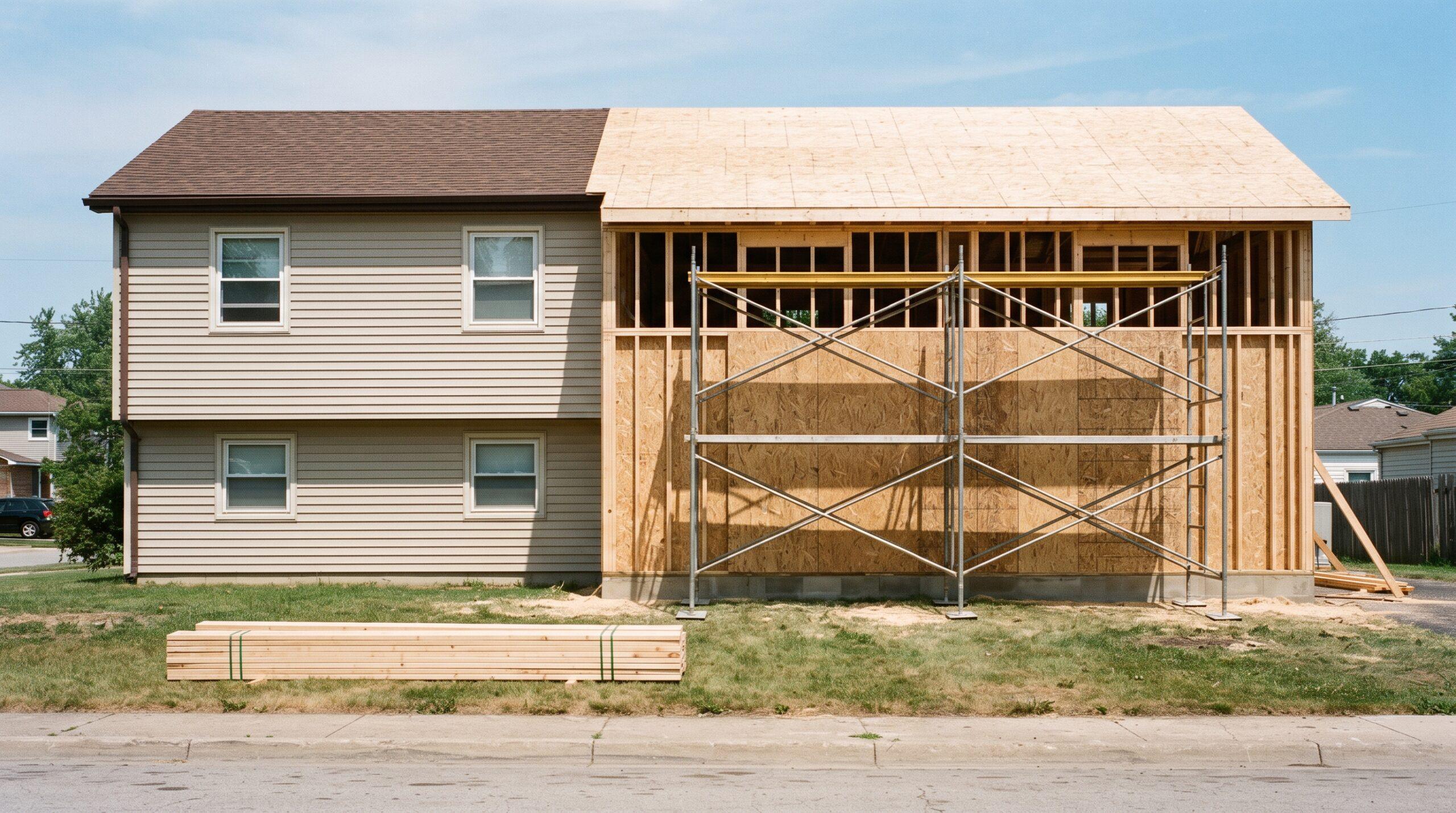
The dwelling limit answers what it would cost to rebuild your specific house. That comes from a replacement-cost estimate: square footage, construction type, roof, finishes, local labor and material prices. Once set at a renewal, it usually only moves if your policy carries an inflation-guard endorsement, which raises the limit a set percentage each year, or if someone asks for a new estimate.
Here is the trap. A rate increase in the mail feels like the carrier just repriced your house. It did not. It repriced your risk pool.
Meanwhile the rebuild number kept climbing on its own. Verisk’s quarterly reconstruction cost analysis tracks materials and retail labor. Its current edition puts total residential reconstruction costs up 3.2% in the twelve months ending April 2026. The prior edition covering the same window a year earlier had residential costs up 4.7% from April 2024 to April 2025.
The worked shortfall: what a 2024 limit buys today
Run this with your own numbers. Everything below is stated so you can substitute yours.
Start with the Alvarez inputs: a dwelling limit of $280,000, set at an April 2024 renewal, on a policy with no inflation-guard endorsement.
Apply the two Verisk residential figures in sequence. April 2024 to April 2025: $280,000 times 1.047 is $293,160. April 2025 to April 2026: $293,160 times 1.032 is $302,541. Compounded, residential reconstruction costs rose 8.1% across those two years.
So the house that cost $280,000 to rebuild in April 2024 costs roughly $302,541 to rebuild now. The limit still says $280,000. The shortfall is $22,541, and it is money that comes out of the homeowner’s pocket after a total loss.
Now the part that surprises people. Most replacement-cost policies apply a coinsurance test, commonly requiring the limit to be at least 80% of full replacement cost for a partial loss to settle on a replacement-cost basis rather than a depreciated one. Eighty percent of $302,541 is $242,033. At $280,000, the Alvarez family is comfortably above that line, so their partial-loss settlements are not penalized. They are only exposed on the tail: a total loss, where the check stops at the limit.
That is the honest verdict. An 8.1% gap on a two-year-old limit is not an emergency. It is also $22,541, and the fix costs a phone call plus a small premium increase on the additional coverage.
Compare the two movements side by side.
| What moved | 2024 to 2026 change | Effect on the Alvarez policy |
|---|---|---|
| North Carolina statewide base rate | Up 15.6% compounded | Premium $2,000 to $2,311 |
| Residential reconstruction cost | Up 8.1% compounded | Rebuild need $280,000 to $302,541 |
| Dwelling limit on the declarations page | No change | Still $280,000 |
| Uncovered gap on a total loss | Opened from $0 | $22,541 out of pocket |
What actually triggers a re-run, and how to request one
Carriers re-run replacement cost on their own schedule, often every few years and sometimes not at all on a renewing policy. You can ask any time, and the ask works better when it is specific.
Call your agent and request a new replacement-cost estimate in writing. Then hand over the inputs. A stale estimate is usually stale because nobody updated these:
- Total finished square footage, including finished basement or attic space
- The year and material of the last roof replacement
- The condition and material of countertops, cabinetry, and flooring
- Any structural addition
- Any upgrade to plumbing, wiring, or heating and cooling
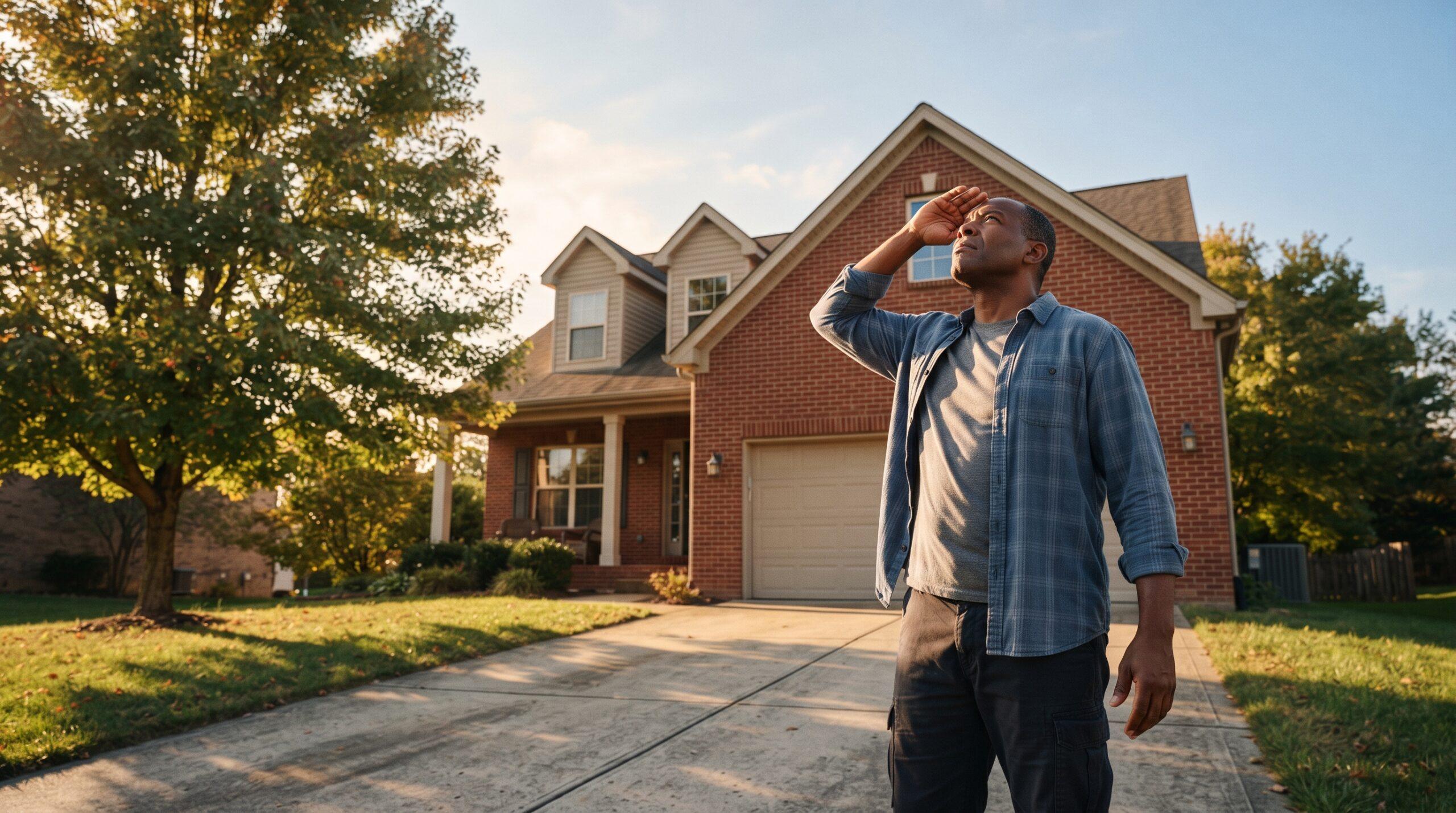
Ask two follow-ups when the new number comes back. First, does the policy carry an inflation-guard endorsement, and at what annual percentage. Second, what extended replacement cost is available, meaning coverage above the stated limit, typically an extra 20% or 25%.
Then check what you are buying. The difference between replacement cost and actual cash value settlement decides whether depreciation is subtracted from your claim check, and the National Association of Insurance Commissioners publishes plain-language guidance on both. If your policy has quietly moved your roof to actual cash value, that matters more than the last $10,000 of dwelling limit.
The renovations that require you to call
Some projects change your rebuild cost enough that waiting for the carrier’s cycle is a mistake. Call within thirty days of finishing any of these:
- An addition or finished basement that adds livable square footage
- A kitchen or bathroom remodel that upgraded cabinetry, counters, or fixtures
- A full roof replacement
- A window or siding replacement across the house
- An electrical or plumbing repipe
- A new heating and cooling system
The pattern is simple. If you would describe the work to a buyer as an upgrade, it changed your replacement cost. Our guides to lowering your premium without cutting coverage and how much dwelling coverage you actually need cover the next steps. If you are also weighing a service contract on aging systems, home warranty versus homeowners insurance draws the line between them.
A dwelling limit that has fallen behind rebuild cost is not just a total-loss problem. Most policies also carry an 80 percent coinsurance requirement that can shrink an ordinary partial claim the moment your limit drops under that threshold.
Frequently asked questions
Does my premium going up mean my coverage went up? No. A base-rate increase changes what the carrier charges to take your risk. It does not touch the dwelling limit on your declarations page. Those are separate numbers set by separate processes, and only the premium moves on the filing calendar.
How do I find out whether my policy has an inflation-guard endorsement? Look at the endorsement list on your declarations page, or ask your agent directly and get the answer in writing along with the annual percentage. If there is no endorsement, your limit has been frozen since the last time someone ran an estimate.
Will asking for a replacement-cost re-run raise my premium? If the new estimate comes back higher and you raise the limit to match, yes, the premium on that portion goes up. You are buying more coverage. The alternative is paying the same increase in rate while carrying a limit that no longer rebuilds your house.
What is the 80% rule and does it apply to me? Many replacement-cost policies require your dwelling limit to be at least 80% of full replacement cost for partial losses to settle without a depreciation penalty. Check your policy language, because the threshold and the consequence both vary by carrier and state.
My house is worth more than my dwelling limit. Is that the same problem? No, and confusing the two is common. Market value includes your land and your neighborhood. Replacement cost is only what it takes to rebuild the structure. In some markets replacement cost exceeds market value, and in others it is well below it.