

7 min read · Last updated October 5, 2026
- ADT’s own residential contract sets the early-termination charge at 75% of your remaining monthly payments, not the 100% figure repeated across most comparison sites.
- SimpliSafe’s terms of service state plainly, “There are no termination fees,” because its service bills month to month with no multi-year term at all.
- Selling your home does not cancel a monitoring contract. ADT and Vivint’s own policies show neither company has a standard way to hand your remaining term to the home’s new owner.
- California and New York both require written notice before a service contract auto-renews, typically 15 to 45 days ahead of the renewal date, yet alarm contracts are a repeat target of state enforcement for skipping that notice.
Breaking an ADT monitoring contract early costs 75% of the payments left on it, by ADT’s own published formula, and selling the house does not make that bill go away. A multi-year contract ends on the date printed in the agreement, not on the day you move out.
This is a different bill than the monthly monitoring fee or your city’s false-alarm fines – it is what you owe for leaving the contract itself before its term is up.
In this article
- The fee formula nobody reads before signing
- What actually happens when you move
- The auto-renewal clock most homeowners never notice
- The one legal escape hatch, and when it does not apply
- Frequently asked questions
Maria listed her house with 14 months left on a 36-month ADT monitoring agreement. Her real estate agent asked whether the buyer wanted the system. Nobody at the closing table mentioned that Maria, not the house, was still on the hook for the contract either way.
The early home security contract fee formula nobody reads
Early-termination math varies more by provider than most homeowners expect, and the number that circulates online is often wrong for the specific company being discussed.
ADT’s own residential services contract states the formula in capital letters: “I WILL PAY ADT 75% OF THE TOTAL REMAINING MONTHLY CHARGES AS AN ALTERNATIVE TO ME HAVING TO PAY THE FULL REMAINING CHARGES. THIS AMOUNT IS A CONTRACT TERMINATION CHARGE AND IS NOT A PENALTY.” On a $49.99 monthly plan with 14 months left, the full remaining balance is $699.86. ADT’s own 75% formula brings that down to $524.90, a real discount off the full remaining term, not the 100% figure that gets repeated across comparison and review sites.
Vivint’s publicly posted policy does not name a percentage at all. Its own support page states only that cancellation requests “may be subject to early termination or other fees as outlined in the Vivint service agreement,” meaning the real number lives in the individual contract a customer signed, not anywhere public.
SimpliSafe takes a different structure entirely. Its terms of service state, “There are no termination fees,” because the service runs as a month-to-month plan with no multi-year commitment underneath it. That trade-off cuts the other way too: a self-install, no-contract system carries none of ADT’s long-term pricing, but it also carries none of a multi-year rate lock.
| Provider | Standard term | Published early-exit cost | Best for |
|---|---|---|---|
| ADT | 36 months (per current promotional terms) | 75% of remaining monthly charges, per its own contract | A homeowner confident they are staying put for the full term |
| Vivint | Multi-year, length set per contract | Not published; set in the individual service agreement | Only after you have the exact fee in writing before signing |
| SimpliSafe | Month to month | None stated in its terms of service | A homeowner who expects to move or switch within a few years |
What actually happens when you move
Neither ADT nor Vivint publishes a clean way to simply hand your remaining contract to the home’s new owner.
ADT’s own contract states, “I may not assign this Contract without prior written consent from ADT,” while reserving the opposite right for itself: “ADT does have the right to assign this Contract… without my approval.” A seller cannot just sign the agreement over to a buyer at closing. ADT has to agree to it first, and nothing in the public contract promises that it will.
Vivint’s support page is blunter about the default outcome. It describes a “Remove, But Don’t Move” scenario directly: “if you’re under contract or still financing equipment, you will continue to be responsible for your monthly service fees in accordance with your Purchase and Service Agreement.” Leaving the panel bolted to the wall for the new owner does not transfer your obligation to pay for it.
A new owner interested in the same provider typically starts a fresh contract of their own rather than inheriting the seller’s remaining term and its remaining discount pricing. That leaves the seller paying out a contract for a system they no longer live with, on a schedule the sale of the house did nothing to shorten.
The auto-renewal clock most homeowners never notice
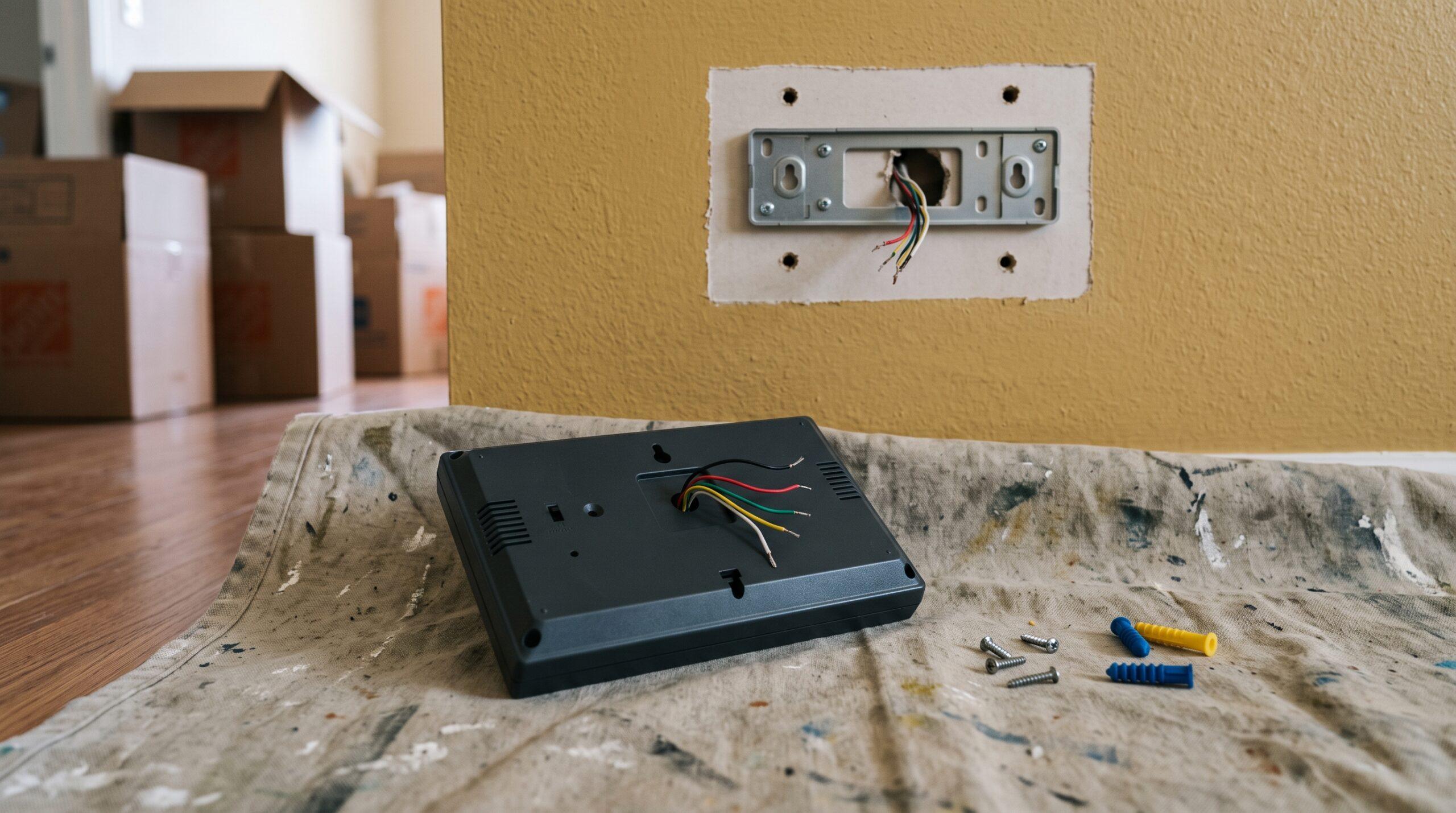
A contract that does not get canceled on time does not simply end. California’s Automatic Renewal Law requires terms to be disclosed “in a clear and conspicuous manner” and requires notice before a longer-term contract renews, with a 15-to-45-day window ahead of the renewal date for annual or longer terms. New York’s General Obligations Law Section 5-903 covers service contracts the same way, requiring written notice served personally or by certified mail 15 to 30 days before the cutoff date that locks in another renewal term.
State regulators have gone after alarm companies specifically for skipping this step. Connecticut returned to court with Safe Home Security in 2022 for a $5 million judgment after the company failed to honor an earlier 2014 settlement over contracts that were renewed automatically without giving consumers a clear chance to cancel.
Massachusetts reached a separate $6.5 million settlement with the same company in 2023 over what its Attorney General’s office described as “deceptively trapping Massachusetts consumers in long-term auto renewal contracts.”
A decade earlier, Washington state fined a different provider, Cencom, after finding that “once a promotional rate of $5.95 per month expires, it spikes to $19.95 a month… for a minimum of two additional years,” with “early cancellation” triggering “a $299.95 fee.”
Mark your contract’s renewal date the day you sign, not the week before it arrives.
The one legal escape hatch, and when it does not apply
Federal law gives some buyers a short, guaranteed window to walk away with no fee at all. The Federal Trade Commission’s (FTC) Cooling-Off Rule applies “if you signed the contract in your home, or if you signed in any location that’s not the seller’s permanent place of business.”
The agency’s own guidance for home security shoppers confirms the mechanics directly: “You have the right to cancel the deal… You don’t have to give a reason,” and the salesperson is required to hand over “two copies of a cancellation form… and a copy of your contract” on the spot.
That window is narrow and does not stretch to every sale. It covers door-to-door sales, trade shows, and temporary venues like a hotel room or a rented fairground booth. A contract signed inside a provider’s own permanent retail store, or finalized days later by phone or online after an in-home pitch, generally falls outside it.
If a salesperson sat at your kitchen table and you signed that day, check the date on your cancellation form immediately. The 3-business-day clock is already running.
Frequently asked questions
How much does it actually cost to cancel an ADT contract early? ADT’s own residential contract sets the charge at 75% of your total remaining monthly payments, described in the agreement as an alternative to paying the full remaining balance. On a $49.99 plan with 14 months left, that works out to roughly $524.90 instead of the full $699.86 owed.
Does selling my house cancel my security monitoring contract? No. A home sale does not end the agreement on its own. ADT requires its written consent before a contract can be assigned to a new owner, and Vivint’s own policy states that a customer under contract stays responsible for the monthly fees even after moving out.
Is there a security company with no early-termination fee? SimpliSafe’s terms of service state there are no termination fees, because its service runs month to month with no multi-year commitment. That flexibility trades off against the multi-year rate locks and bundled equipment pricing that longer contracts typically offer.
What is the Cooling-Off Rule and does it cover security systems? It is a federal rule giving buyers three business days to cancel a contract signed in their home or at a temporary sales location, with no reason required. The FTC’s own consumer guidance for security-system shoppers confirms it applies to these sales, though it generally does not cover a contract signed inside a provider’s permanent retail store.
How do I avoid an unwanted auto-renewal? Mark your contract’s renewal date the moment you sign, and send written cancellation notice inside the window your state requires, often 15 to 45 days before that date. Several providers have faced state enforcement specifically for failing to give customers a clear chance to cancel before a contract renewed.