
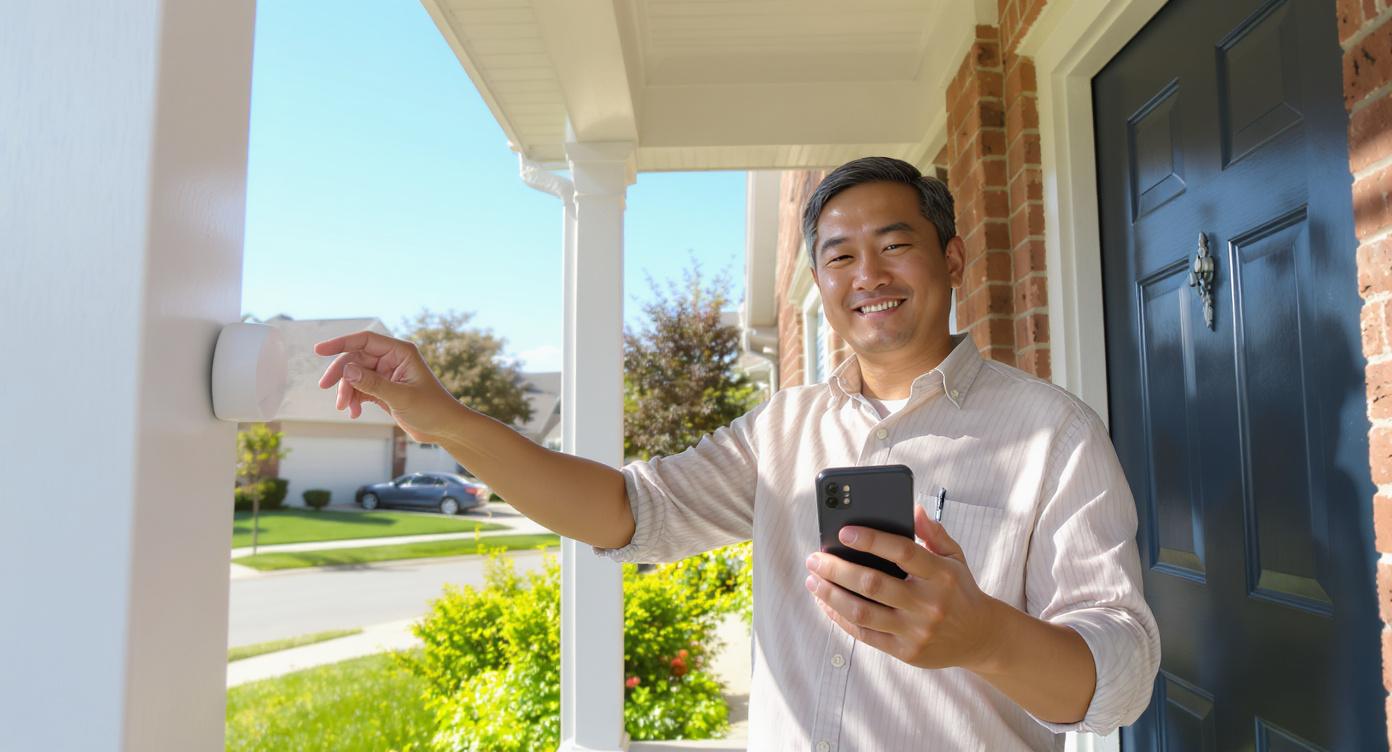
A homeowner in Atlanta pays $48 a month for a professionally monitored security system. Over five years, that adds up to $2,880. Last year his front door was kicked in while he was at work. The monitoring company dispatched police within 90 seconds and the intruder ran before reaching the bedroom safe. The system more than paid for itself in one incident. The same system, unmonitored, would have done nothing.
That story is not universal. Most homeowners with monitored systems will never need that 90-second dispatch. Whether the monthly fee is worth paying depends on your specific risk profile, your insurance discount structure, and how quickly local police actually respond to alarm calls in your area.
What Monitoring Actually Does
A monitored security system has two parts: the hardware in your home (sensors, cameras, control panel) and a connection to a 24-hour monitoring center that responds when an alarm triggers. The hardware costs are one-time. The monitoring fee is the recurring bill that pays for the dispatch service.
The Federal Trade Commission’s guide to shopping for a home security system covers how monitoring contracts and fees are typically structured.
When a sensor trips, the system sends a signal to the monitoring center. An operator calls your phone within seconds to verify whether it is a real emergency or a false alarm. If you do not answer, or you give a duress code, the operator dispatches local police, fire, or medical responders depending on the alarm type. According to the Electronic Security Association, average call-to-dispatch times range from 30 to 90 seconds for major monitoring providers.
A monitoring fee and an insurance discount are two separate transactions that only sometimes offset each other. NAIC’s homeowners insurance guide explains why you should verify the discount directly with your carrier, and USA.gov’s disaster-assistance page is the federal resource to keep separate from a monitoring company’s own marketing claims.
Self-monitoring means the system pings your phone instead of a monitoring center. You get a push notification when an alarm trips, and you decide whether to call the police yourself. The hardware works identically. The difference is who responds when you cannot.
When the Monthly Fee Pays Off
Professional monitoring is worth the cost in these specific situations:
– You live in an area with slow police response times, where verified-alarm calls are prioritized over unverified ones – You travel frequently or have a second home, and you cannot reliably answer a push notification within seconds – Your homeowners insurance gives a substantial discount, typically 10% to 20%, specifically for a centrally monitored system – You have high-value items at home that justify the dispatch speed, such as a safe, art, jewelry, or specialized equipment – You have medical or duress conditions where a panic-button signal needs to reach emergency services without you placing the call yourself
The most common high-value case is a homeowner whose insurance carrier requires monitored signaling for a specific discount tier. Many insurers offer a 5% discount for any alarm system and an additional 10% to 15% for a UL-certified centrally monitored system, though Consumer Reports has found these discount amounts vary widely by carrier and state. On a $2,400 annual premium, that extra discount alone is worth $240 to $360 a year, which fully or partially offsets the monitoring fee.
Verified-response policies in roughly 30 US cities also make monitoring more valuable. In those cities, police only respond to alarms if a monitoring center verifies an actual intrusion, not just an alarm signal. Self-monitored systems get no police response in verified-response cities unless the homeowner makes the call themselves.
When Self-Monitoring Wins
Self-monitoring is the smarter spend when:
– You live in a low-crime, high-response area where you would call the police yourself anyway – Your insurance offers no discount or only a flat 5% discount for any alarm system, monitored or not – You are home most of the time and can respond to push notifications immediately – You have video cameras at the entry points, so you can visually verify what is happening before calling
A self-monitored system with quality cameras and instant phone alerts can be as effective as a monitored system if you are reliably available to respond. The monthly savings are real: $360 to $720 a year stays in your pocket.
The trap homeowners fall into is assuming self-monitoring is “free.” It is not, because you bear the response time risk. If you are in a meeting, asleep, or your phone is dead during a break-in, the response delay is on you. For some homeowners that risk is acceptable. For others it is not, and that judgment is the heart of the decision.
How to Choose the Right Monitoring Tier
If you decide to pay for monitoring, the tier matters. Most providers offer three tiers:
– Basic monitoring at $20 to $25 per month: intrusion alarm dispatch only – Standard monitoring at $30 to $45 per month: intrusion, fire, carbon monoxide, and medical dispatch – Premium monitoring at $50 to $65 per month: all above plus video verification, cellular backup, and remote arm/disarm
The standard tier is what most homeowners need. Basic monitoring is usually too narrow because a fire or carbon monoxide event is far more likely than a break-in and the marginal cost of including those services is small. Premium monitoring is worth it if you have specific use cases, such as frequent travel or a second home, that justify the extra features.
Avoid long-term contracts when possible. Many providers offer month-to-month service now, and the contract-free providers typically charge similar rates to the locked-in versions. A three-year contract limits your ability to switch when a better option appears, and the early termination fees are punitive enough that most homeowners stay locked in even when they want out.
See our breakdown of exactly what those early-termination fees cost (and what happens if you sell before the contract ends) before you sign a multi-year agreement.
For more on how home security fits into your overall homeowner budget, see The Real Cost of a Home Security System and What You Actually Need in a Home Security System.
Questions Homeowners Ask – What does a home security system actually cost over five years? – Should you install your own security system or hire a pro? – Are smart locks actually more secure than a deadbolt?