
Start With What You Are Actually Protecting Against
Most residential break-ins are opportunistic. The burglar is not casing your house for a week. They are walking through a neighborhood looking for unlocked cars, open garage doors, and homes that look unoccupied. The deterrence model — making your home look like more effort than the next one — works.For insurance context, NAIC’s homeowners insurance guide explains why homeowners should verify coverage details directly. For emergency planning and recovery, USA.gov’s disaster-assistance page is the federal resource to keep separate from private monitoring claims.
This changes what equipment actually matters. A visible camera at the front door and a yard sign from a monitoring company provide most of the deterrence value of a full system at a fraction of the cost. The research on this is consistent: the presence of visible security measures reduces the probability of a break-in. What a full system adds is detection and response. If deterrence fails and someone enters anyway, sensors trigger an alarm, monitoring calls the police, and you get a notification. For some homeowners in some neighborhoods, that response capability is worth paying for. For many others, deterrence alone is sufficient. — > Most residential burglaries are opportunistic — visible deterrents like cameras and yard signs eliminate most risk. A full monitored system adds response capability, but you should know which problem you are actually solving before paying for it. —The Three Tiers: What Each One Costs and Covers
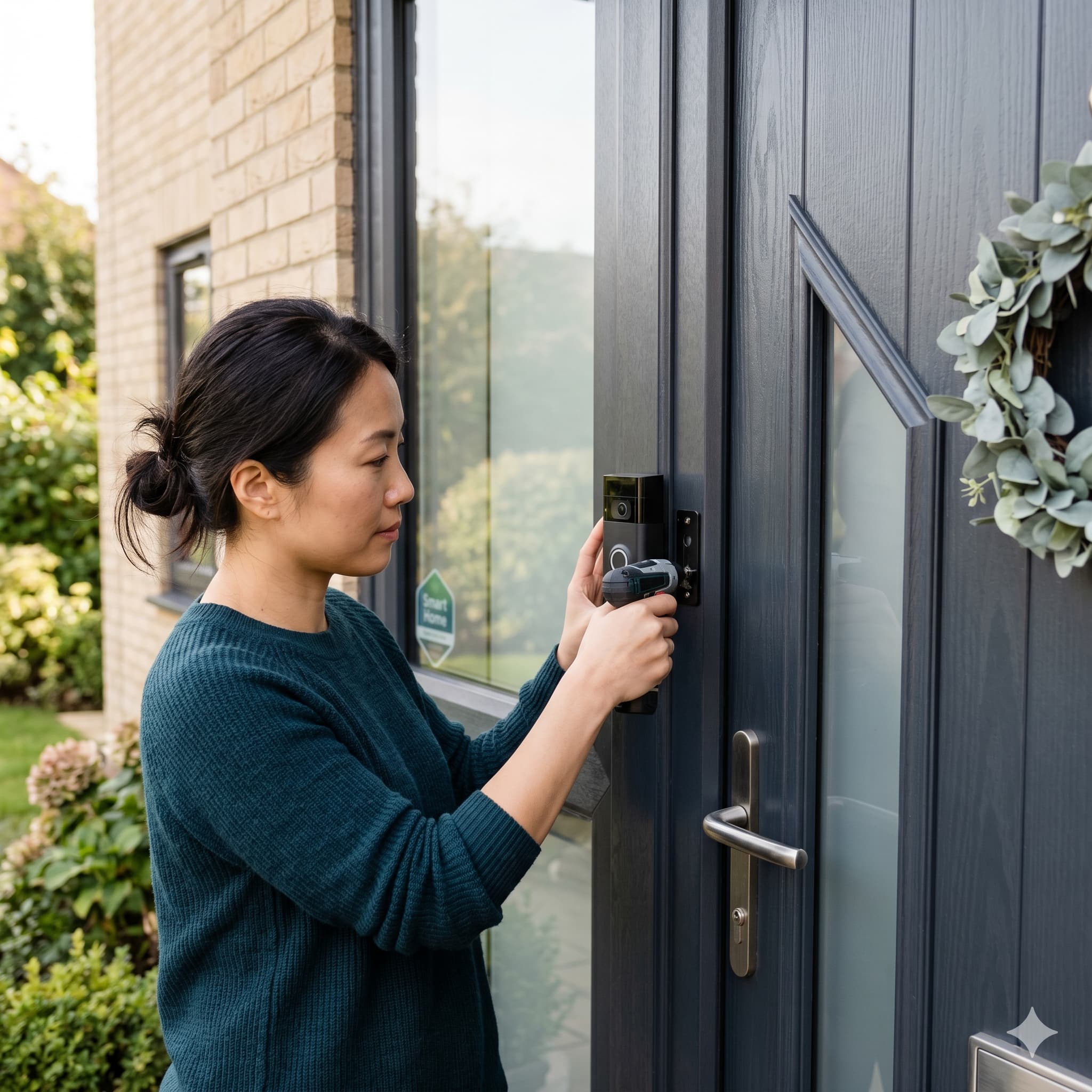
Tier 1 is deterrence only. A video doorbell ($100–$200), one or two outdoor cameras ($80–$150 each), and a yard sign. No monitoring fee. Notifications go to your phone. This setup handles the scenario it is designed for — opportunistic intrusion — and costs under $500 to set up. Tier 2 adds interior detection. Door and window sensors, a motion detector for common areas, and a local alarm that sounds if triggered. This can be DIY with systems like Ring Alarm or SimpliSafe for $200–$400 in hardware. Self-monitoring through your phone is free. Professional monitoring (24/7 response that contacts emergency services) runs $10–$20 per month. Tier 3 is professionally installed, comprehensively monitored. Multiple cameras, full perimeter sensors, glass break detection, smoke and CO integration, cellular backup. Hardware plus installation runs $1,000–$2,500. Monthly monitoring is $30–$60. This tier makes sense for larger homes, homes in higher-risk areas, or homeowners who want hands-off response without managing their own system.The Questions That Actually Determine What You Need
What is the crime pattern in your neighborhood? Check your local police blotter or a neighborhood app. If vehicle burglaries are common but home invasions are rare, a driveway camera matters more than interior sensors. Are you home frequently? An occupied home is a much harder target. Security investment matters more for vacation properties, frequent travelers, or single-person households. Do you have doors and windows that are harder to monitor? Older homes with poor sight lines, back doors tucked behind fences, or detached garages increase the value of perimeter sensors. Does your insurance discount offset the monitoring cost? Many insurers offer 5–20% discounts for monitored security systems. At $60/month monitoring and a 10% discount on a $1,500 annual premium, you recover $150/year — meaningful but not a complete offset. — > Ask your insurance company what discount a monitored system qualifies for before you buy. The discount does not cover the full cost, but it should factor into your total cost calculation. —What You Do Not Need
Smart locks as a security upgrade (more on this separately — they are a convenience feature, not a security one). Indoor cameras unless you have a specific reason for them — they create privacy trade-offs without adding much deterrence. Professional installation if you are comfortable with DIY — modern systems are designed for self-installation and work just as well. A 3-year monitoring contract if the month-to-month option is available. The goal is not to build a fortress. The goal is to make your home a less attractive target and to have a response path if something happens. Those two things do not require the most expensive system on the market. Questions Homeowners Ask- What does a home security system actually cost?
- Smart locks: are they actually more secure than a deadbolt?
- How to lower your homeowners insurance premium this year
Disclaimer: This article is for informational purposes only and is not financial, legal, or tax advice. Programs, rates, and eligibility rules change frequently. Consult a licensed professional or the relevant government agency for guidance specific to your situation.
Use this decision checklist
| Need or risk | Start with | Add only when it solves a specific problem |
|---|---|---|
| Deterrence | Visible exterior lighting, a doorbell camera, and locked access points | More cameras when there is a defined blind spot |
| Entry awareness | Door and window contacts at the most important openings | Glass-break or motion sensors where the layout justifies them |
| Continuity | A plan for internet, power, and account access | Cellular backup or professional monitoring when an outage would matter |
| Privacy | Strong passwords, updates, and multi-factor authentication | Additional cloud features only after reviewing retention and access settings |
For the underlying safety and consumer-protection rules, see CISA’s connected-device security guidance, the FTC’s advice before signing a monitoring contract.