
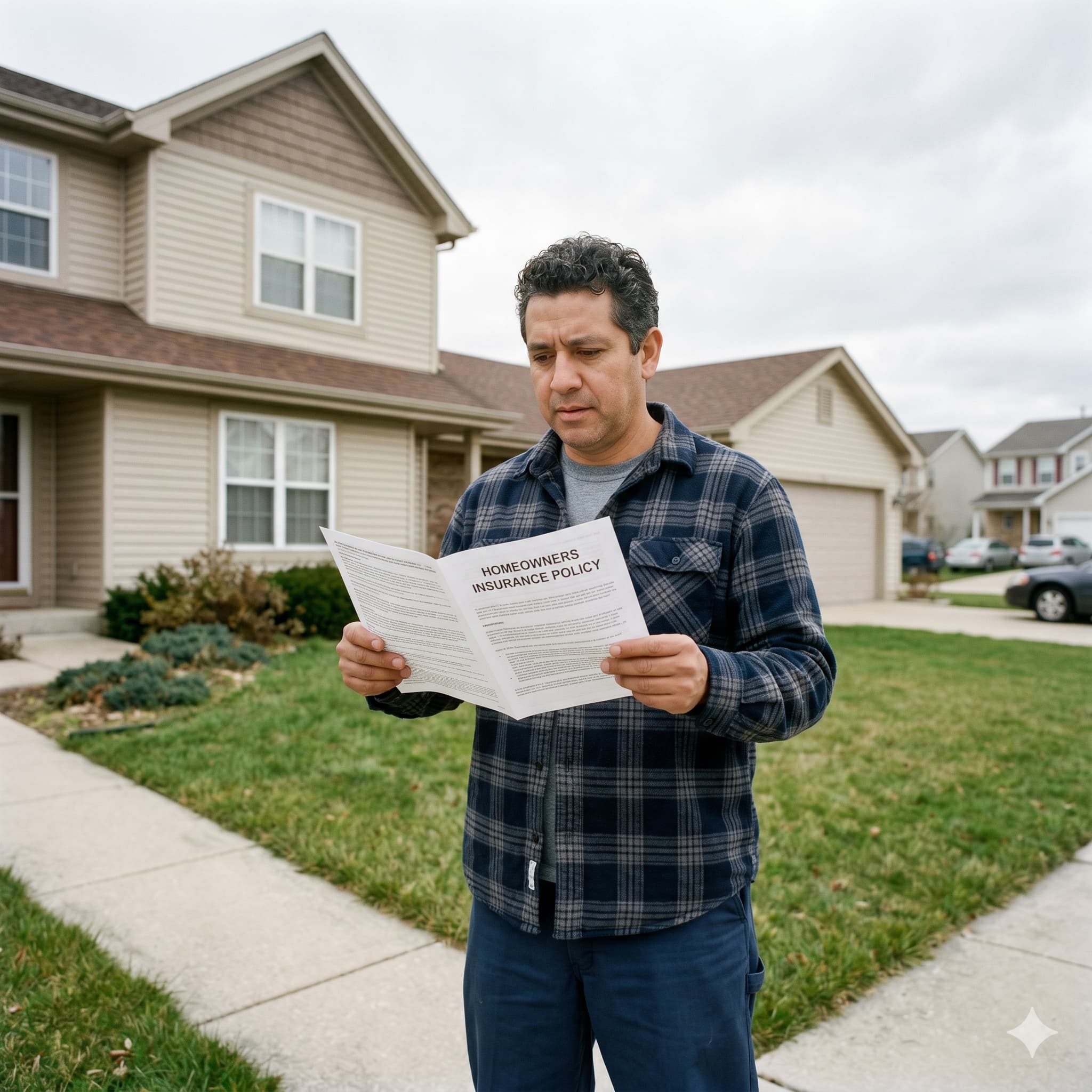
Your home is worth $380,000 on Zillow. Your homeowners policy has a dwelling coverage limit of $380,000. That feels right. In many markets, it is not — because what your home would sell for and what it would cost to rebuild it from the foundation up are two different numbers, and your insurance only covers one of them.
Dwelling coverage, labeled Coverage A on your declarations page, is the portion of your homeowners policy that pays to repair or reconstruct the physical structure of your home after a covered loss. The limit you set is the ceiling on that payment. If the actual cost to rebuild exceeds your limit, the difference is yours to pay. Most homeowners do not find this out until after a major claim.
Market Value vs. Rebuild Cost: Why They Diverge
Market value is what a buyer would pay for your property, including the land, the location, the school district, and the neighborhood comparables. When you file a dwelling claim, none of those factors are relevant. Your insurer is not buying the location or the land. They are paying to reconstruct the physical structure of your home from scratch using current labor and materials in your local market.
Rebuild cost is driven by local contractor rates, current lumber and material prices, the square footage and features of your home, and code compliance requirements. In many markets, rebuild cost per square foot runs higher than market value per square foot — especially in lower-cost-of-living areas where land value is relatively low but construction costs are similar to national norms.
Dwelling coverage is only one line of a much bigger policy. NAIC’s homeowners insurance guide explains how it fits with the rest of what a standard policy covers, and USA.gov lists federal disaster-assistance resources for losses a dwelling limit alone will not touch.
FEMA’s flood-insurance program publishes its own replacement-cost guidance, the same rebuild-cost math that should set your dwelling coverage number.
Construction cost inflation has widened this gap significantly since 2020. The National Association of Home Builders reported that residential construction costs increased by more than 30 percent between 2020 and 2023, driven by lumber prices, supply chain disruptions, and labor shortages. A policy set in 2019 with modest annual inflation adjustments may be substantially behind current rebuild costs even if it started at the right number.
How Insurers Set Your Initial Limit (And Where It Goes Wrong)
When you first bought your policy, your insurer used a replacement cost estimator — a software tool that inputs your home’s square footage, year built, construction type, and basic features to generate an estimated rebuild cost. These tools are useful starting points but they are not precise measurements. Custom finishes, non-standard construction materials, finished basements, high ceilings, and unique architectural features frequently get underestimated or missed entirely.
Insurers apply annual inflation adjustments to your Coverage A limit at renewal, typically 2 to 4 percent per year. In years when construction costs rose 10 to 15 percent — which happened repeatedly between 2020 and 2023 — those automatic adjustments left significant gaps. The adjustments are based on general indices that may not reflect your specific market or home type.
If you are pricing a policy on a home you are about to buy rather than reviewing one you already have, the property’s own insurance claims history factors in too. A prior owner’s paid claims can follow the house into your first quote, separate from and in addition to any rebuild-cost gap.
How to Check Whether Your Limit Is Adequate
Pull your homeowners insurance declarations page and find the Coverage A limit. Now request a current replacement cost estimate from your insurance agent. This is a standard service at no charge, and a good agent will do it proactively at every renewal. If yours does not, ask.
For a rough cross-check, find out what new residential construction currently costs per square foot in your market — your local home builders association publishes this, or you can call a local general contractor for a range. Multiply that by your home’s finished square footage and add 10 to 20 percent for code upgrade requirements and debris removal costs. If your Coverage A limit is meaningfully below that number, you have a gap worth addressing.
The code upgrade issue is significant for older homes. If your home was built before 1990 and suffers a total loss, the rebuilt structure must meet current building codes — updated electrical panels, insulation requirements, fire separation standards, and accessibility requirements depending on your jurisdiction. Meeting current codes on a home originally built to 1985 standards can add 10 to 25 percent to the rebuild cost. This is covered under an ordinance or law coverage endorsement, which standard policies either exclude or include at minimal amounts.
Three Ways to Close a Coverage Gap
The first option is simply to increase your Coverage A limit. Your premium will rise, but the increase is typically modest — roughly $50 to $120 per year for an additional $50,000 in dwelling coverage, depending on your carrier and location. The cost of adequate coverage is almost always lower than people expect.
The second option is a guaranteed replacement cost endorsement, which commits the insurer to pay the full actual cost of rebuilding even if it exceeds your stated limit, usually up to 20 to 50 percent above the policy limit depending on the endorsement terms. Not every carrier offers this, and it costs more than standard coverage, but it removes the guesswork entirely. If you have a custom home or an older home with construction details that are difficult to price precisely, this endorsement is worth the additional premium.
The third option is an extended replacement cost endorsement, a middle ground that increases your effective limit by a fixed percentage — typically 25 or 50 percent above the stated amount — without the open-ended commitment of guaranteed replacement cost. This provides meaningful buffer against cost overruns without the full premium of the guaranteed option.
The Annual Review That Takes Fifteen Minutes
Most homeowners accept their renewal without reviewing Coverage A. The automatic inflation adjustments create a false sense that the limit is being maintained, when in fact those adjustments may not keep pace with your local construction market or account for changes to your home.
At each annual renewal, spend fifteen minutes on this: request a current replacement cost estimate from your agent, compare it to your current limit, and review whether any renovations or additions you completed in the past year need to be reflected. A finished basement, an addition, a major kitchen renovation — all increase your rebuild cost and should be disclosed to your insurer. Failing to disclose improvements can leave you with a coverage shortfall that is partly of your own making.
Questions Homeowners Ask
- How to lower your homeowners insurance premium without reducing coverage
- Title insurance explained — is it worth the cost?
- The home maintenance budget that prevents expensive insurance claims