
The average HVAC replacement costs between $7,000 and $12,000. The average preventive maintenance visit costs $80 to $150. Most homeowners schedule neither until something stops working, which is precisely when a small problem becomes a large one.
HVAC systems do not fail without warning. They degrade gradually, and that degradation follows a predictable schedule. Matching your maintenance to that schedule is the difference between a system that lasts 15 to 20 years and one that limps to 10.
> The two most expensive HVAC failures, compressor failure and heat exchanger cracks, are almost always preceded by months of reduced airflow. Reduced airflow almost always traces back to a clogged filter or a dirty coil. Both are preventable.
A compressor failure or a cracked heat exchanger is a full-system repair, not routine maintenance, and the cost reflects that. USA.gov’s home-repair programs page and HUD’s home improvements page are legitimate places to check for assistance before paying out of pocket.
Monthly: Filter Changes Are Not Optional
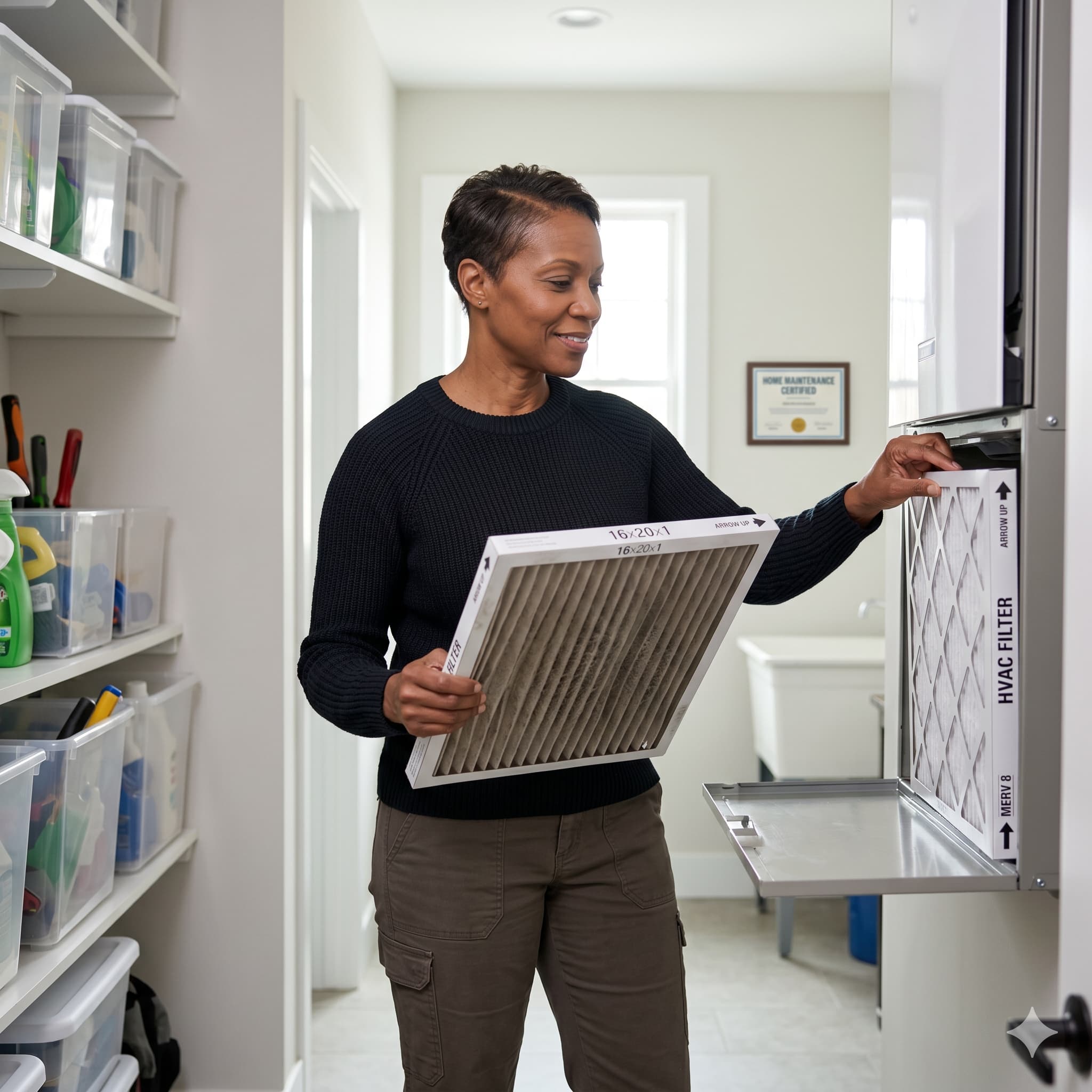
Replace or inspect your air filter every 30 days if you have pets or household members with allergies. Every 60 to 90 days is the minimum for standard homes. The filter is not just for air quality. It protects the blower motor and the evaporator coil from debris accumulation.
A clogged filter forces the system to work harder to move air. Over time, that added strain shows up as higher energy bills first, then premature wear on the blower motor, then reduced cooling capacity as the evaporator coil becomes restricted. By the time the symptoms are noticeable, the damage is often already done.
Check that the filter fits snugly with no gaps around the edges. Air bypassing the filter deposits debris directly onto the coil, which requires a professional cleaning to address.
Spring: Before Cooling Season Starts
Schedule your annual professional tune-up in March or April, before demand peaks in late May. HVAC contractors fill their books fast in June. You will pay more and wait longer if you call after the heat arrives. A pre-season tune-up typically includes refrigerant level check and leak inspection, evaporator and condenser coil cleaning, condensate drain flush, electrical connection tightening, and thermostat calibration.
Clear at least two feet of space around the outdoor condenser unit. Trim back any shrubs or plants that grew close to the unit over winter. Blocked airflow across the condenser coils is one of the top causes of compressor overwork in summer.
Run the cooling system for a test run before temperatures climb. If it takes more than a few minutes to cool the home, or if you hear grinding, rattling, or clicking that was not there before, call for service before the hottest week of the year.
Fall: Before Heating Season Starts
Run the same logic in reverse. Schedule a heating inspection in September or October before contractors are slammed with emergency calls in November.
For gas furnaces, the heat exchanger inspection is the critical item. A cracked heat exchanger can allow combustion gases, including carbon monoxide, to mix with the air circulating through your home. This is not a DIY check. It requires a technician with the right equipment.
Replace your furnace filter at the start of heating season regardless of when you last changed it. Change thermostat batteries. Test your carbon monoxide detector. If you have a hot-water heating system, bleed your radiators to clear trapped air that prevents even heat distribution and forces the boiler to run longer than needed.
> Scheduling your HVAC tune-up before peak season, not during it, cuts your wait time in half and gives you first access to appointment windows. In most markets, spring tune-ups in March cost less and book faster than June emergency calls.
Summer and Winter: In-Season Monitoring
Keep an eye on your energy bills during peak months. A sudden spike in consumption, without a change in usage habits, is often the first signal that something is underperforming. Compare month-over-month consumption against the same month in the prior year.
Keep supply vents unobstructed. Furniture placed over or directly in front of vents restricts airflow and creates uneven temperatures in the home. Restricted supply vents can cause pressure imbalances that reduce system efficiency and increase wear over time.
Check that the condensate drain pan under your indoor air handler is dry. Standing water in the pan means the drain line is not clearing properly. A wet-dry vac can clear a condensate drain line in minutes. Ignoring it risks water damage to your ceiling or subfloor.
For more on preventing the failures that cost the most, see Preventive Maintenance: The Money-Saving Strategy Most Owners Skip and Your Seasonal Home Maintenance Checklist.
Questions Homeowners Ask
- What is included in a seasonal home maintenance checklist?
- What preventive maintenance steps save the most money?
- How do you extend the life of your HVAC system?