
6 min read · Last updated July 13, 2026
- Rate lock extensions typically cost 0.125 to 0.375 points of your loan amount per extension, which is $425 to $1,275 on a $340,000 loan.
- Freddie Mac’s Primary Mortgage Market Survey has recorded 30-year rate swings of more than half a point within a single month several times in 2026, which is exactly the kind of move a lock protects you from.
- If losing your lock would push your rate up by even a quarter point, the one-time extension fee almost always costs less than the higher payment over the next several years.
- Most lenders cap you at one or two extensions, so a closing delay past 30 days usually forces a real decision instead of another small fee.
In this article
- What a rate lock extension actually costs
- The math: extension fee vs. a higher rate
- When floating is the smarter move
- What to ask your lender before you decide
- FAQ
Danielle locked her rate at 6.375% on a $340,000 loan in early June, good for 45 days. A title problem on the seller’s side pushed her closing back by three weeks, and her lender’s rate lock desk quoted her $700 to extend the lock through the new date. She had never heard of a lock extension fee before that phone call, and she had 48 hours to decide.
That $700 number feels arbitrary until you compare it to what happens if the lock simply expires. Here is how to run that comparison before your own deadline arrives.
What a rate lock extension actually costs
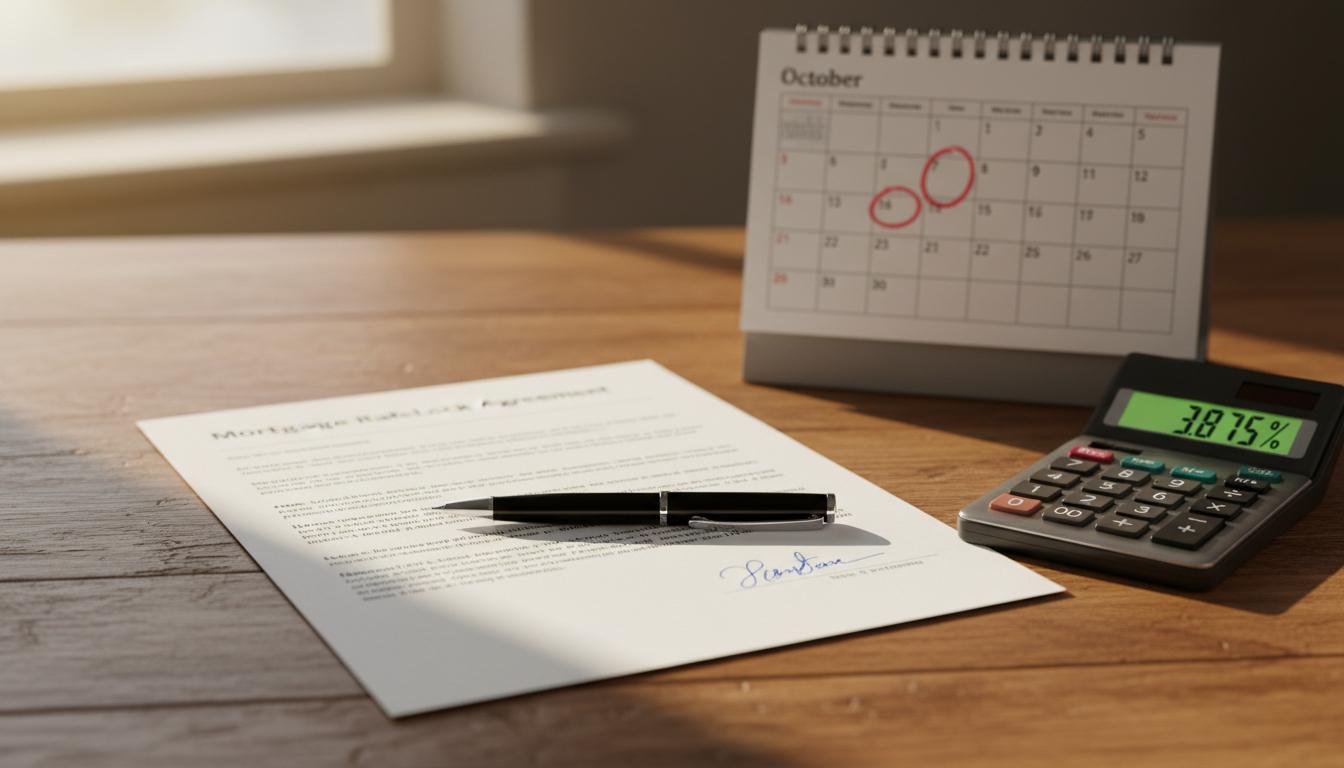
A rate lock is the lender’s promise to honor a specific interest rate for a set window, usually 30, 45, or 60 days, while your loan moves through underwriting. When your closing date pushes past that window, the lock expires and the lender re-prices your loan at the current market rate, whatever that happens to be that day.
An extension buys more time on your original rate. Lenders typically charge 0.125 to 0.375 points per extension, where one point equals 1% of your loan amount. On Danielle’s $340,000 loan, that range runs from $425 to $1,275 depending on how many extra days she needs and her lender’s specific fee schedule. Some lenders charge per-day instead of a flat point fee, often around $15 to $30 per day extended.
The fee is not negotiable in the way your rate was. It is closer to a posted price. What you can control is whether paying it makes financial sense for your situation.
The math: extension fee vs. a higher rate
Run the actual numbers instead of guessing. At 6.375%, Danielle’s monthly principal and interest payment on $340,000 is roughly $2,122. If her lock expires and rates have moved up just a quarter point to 6.625%, that same loan reprices to roughly $2,176 a month, a difference of about $54.
Fifty-four dollars a month sounds small until you multiply it out. Over just the first five years, that gap adds up to roughly $3,240, more than four times the $700 extension fee Danielle was quoted. Over the full 30-year term, the difference compounds into tens of thousands of dollars if she never refinances.
Freddie Mac’s Primary Mortgage Market Survey, the industry’s benchmark weekly rate tracker, has shown 30-year average rates swinging by more than half a percentage point within a single month multiple times in 2026. That is not a rare event. It is a normal part of the current rate environment, which is exactly why the extension math tends to favor paying the fee whenever the lock is protecting a rate meaningfully below where the market sits today.
When floating is the smarter move
The math flips in one specific situation: when rates have been dropping, not rising, since you locked. If the trend during your delay has been downward, the rate you locked may already be worse than what is available right now. Paying to extend a lock that is above market defeats the purpose of the lock in the first place.
Before you pay any extension fee, ask your lender for a same-day market rate quote for a new lock at your remaining term. If that new rate is lower than your existing lock, ask whether your loan qualifies for a float-down option, a feature some lenders include that lets you drop to the current lower rate without fully re-locking. Not every loan program offers one, and it usually carries its own smaller fee, but it is worth asking before you pay a full extension fee to protect a rate the market has already beaten.
What to ask your lender before you decide
Three questions settle this for almost every borrower facing a closing delay:
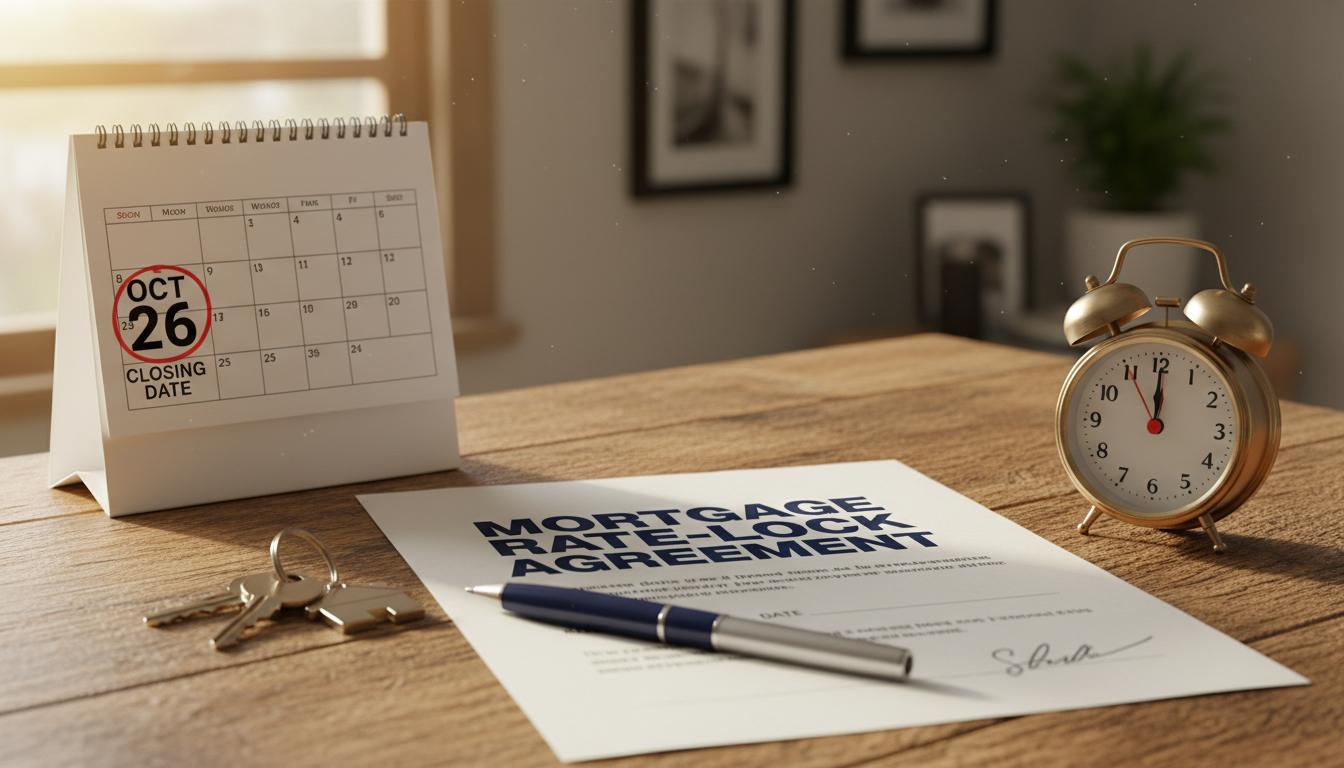
First, what is today’s market rate for my remaining lock term, and is it higher or lower than what I already locked? Second, what does the extension actually cost in dollars, not just in points, so you can compare it directly to your monthly payment difference? Third, how many extensions does my lender allow, since a second delay past the extension window can mean re-locking at a fresh rate with no protection at all.
Danielle’s answer, once she ran the numbers, was straightforward. Her $700 fee protected roughly $3,200 in payments over five years alone. She paid it. If the market had moved the other way during her delay, she would have let the lock expire and re-locked at the lower rate instead. See how the same before-you-lock comparison applies at when to lock your mortgage rate, and if your delay stretches long enough that a full re-lock becomes the better option, rate buydowns vs. discount points walks through the points math that also drives extension-fee pricing.
FAQ
What is a rate lock extension fee, in plain terms? It is a charge your lender adds to keep your original interest rate in place past the original lock deadline, usually because your closing date moved. It is priced in points (a point is 1% of your loan amount) or as a flat per-day charge, and it is separate from your regular closing costs.
How long can I extend a rate lock? Most lenders allow one or two extensions, typically in 7 to 15 day increments, before requiring you to re-lock at the current market rate entirely. Ask your loan officer for your specific lender’s maximum extension window before you assume you can keep pushing the date.
Who pays for a rate lock extension when the delay isn’t my fault? It depends on your contract with the seller and your lender’s policy. Some purchase agreements assign delay costs to whichever party caused them, so if a title issue or appraisal delay on the seller’s side pushed your closing, you may be able to negotiate having the seller cover part or all of the extension fee.
Is it ever smarter to just let the lock expire? Yes, if market rates have dropped since you locked. In that case a fresh lock at the new, lower rate can beat paying to protect a rate that is now worse than what is available. Always get a same-day rate comparison from your lender before paying any extension fee.
Does a rate lock extension affect my APR or my closing costs? The extension fee itself is usually a separate line-item charge, either paid upfront or rolled into your closing costs, and it does not change your interest rate or the terms of your loan itself. It only buys you extra time to close at the rate you already locked.
Primary sources: Freddie Mac Primary Mortgage Market Survey and the CFPB’s guide to how a rate lock works.