
7 min read · Last updated November 2, 2026
- A smart water shutoff valve runs about $600 for the device (This Old House) plus $400 to over $1,200 in professional plumbing labor (Engineer Fix), landing most installs between $1,000 and $1,800 all-in.
- The Insurance Information Institute (III) puts the average water damage and freezing claim at $15,400, and about 1 in 60 insured homes files one in any given year.
- Mercury Insurance’s California leak-detection program paid $400 toward a Flo by Moen device and knocked 10% off part of the homeowners premium, a real example worth asking your own carrier to match.
- Using the III’s own frequency and severity numbers, a $1,000 installed valve pays for itself in statistically expected claim costs in under four years, before any insurer discount is even factored in.
In this article
- What a smart water shutoff valve costs, installed
- What insurers actually give you for installing one
- The payback math
- Where it won’t help
- Frequently asked questions
A professionally installed smart water shutoff valve typically costs $1,000 or more, while the average homeowners water damage and freezing claim pays out $15,400, according to the Insurance Information Institute. Running that claim frequency and severity data through the math, the device earns back its own cost in avoided expected claim costs in under four years, even before any insurance discount.
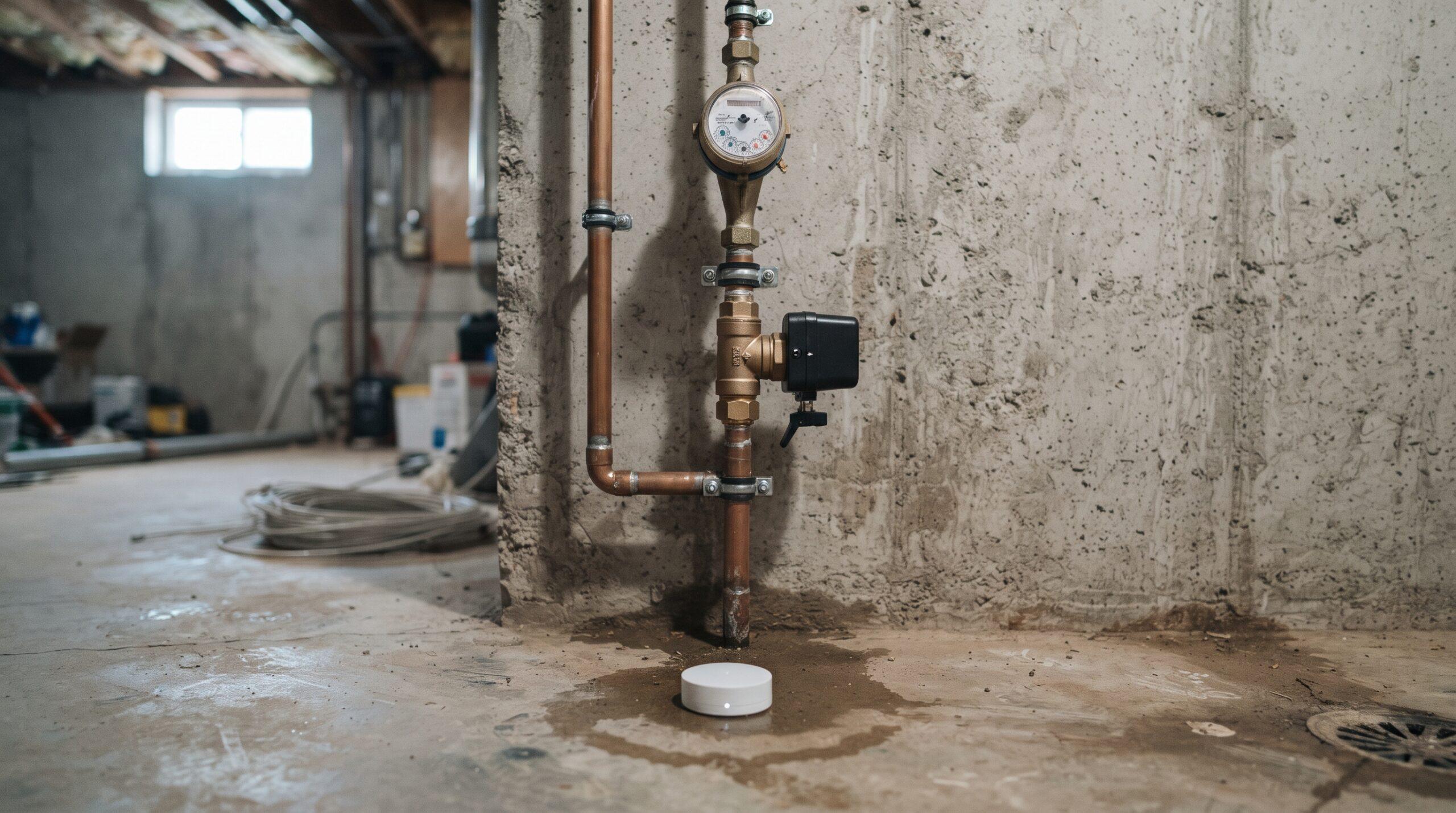
A water shutoff valve sits on your home’s main water line, usually just after the meter, and closes automatically the moment it detects a sustained flow that doesn’t match your normal usage pattern or a paired sensor spots moisture on the floor. It’s a different device from a basic leak sensor, which only sounds an alarm after you’ve already lost water. The shutoff valve stops the water before the loss grows into a claim.
What a smart water shutoff valve costs, installed
Engineer Fix, a plumbing cost guide, puts the hardware itself at $500 to $600 for the common 3/4-inch residential size, rising to $750 to $850 for the larger 1.25-inch version used on bigger homes. This Old House lists the same category of device at “$600 and up.” Professional installation is a separate line item: Engineer Fix puts the plumbing labor at $400 to over $1,200, depending on how accessible your main line is and whether any rework is needed to fit the valve in-line.
For the common 3/4-inch size, that’s $600 for the device. Add the $400-to-$1,200 labor range and most homes land between $1,000 and $1,800 for a fully installed system.
A home with an easily accessible main line near the meter sits at the low end. A finished basement, a crawlspace entry, a larger pipe size, or a main line that needs to be rerouted pushes the total toward the high end.
What insurers actually give you for installing one
This is where the marketing gets ahead of the policy language. Chubb’s own water-defense page tells customers they “may be eligible to receive a discount” on their home insurance premium for installing an approved shutoff device, but it states no specific percentage and directs the reader to check with an agent. There’s no industry-standard number, and no insurer is required to offer one at all.
There are real, named programs that do. Mercury Insurance ran a California leak-detection program that paid $400 toward a Flo by Moen device installed by a verified plumber, plus a 10% discount on a portion of the customer’s Mercury homeowners premium. That’s one real carrier’s real terms in one state, not a guarantee of what your own policy offers.
Before you buy anything, call your own carrier and ask three questions:
- Does it offer any credit for an automatic shutoff valve?
- Does the device have to be on an approved list?
- Does it need professional installation or a receipt on file to qualify?
Some insurers only apply the discount if you proactively report the device, so a valve sitting unreported in your file earns you nothing.

The payback math
This calculation uses only the Insurance Information Institute’s own published numbers, with no manufacturer claims about how effective any single device is. About 1 in 60 insured homes files a water damage or freezing claim in a given year, and the average paid claim is $15,400. Divide the severity by the frequency: $15,400 ÷ 60 comes out to about $257 a year in statistically expected water-damage claim cost, averaged across every insured home whether or not it ever actually files one.
A $1,000 installed system divided by that $257-a-year figure comes out to just under four years to earn back its own cost in avoided expected claim exposure, before counting any premium discount your carrier might add on top. Stretch the installed cost to the $1,800 high end and the payback moves to about seven years. Either way, the device typically earns back its cost well inside the 10-plus-year working life most manufacturers rate these systems for.
Over a longer ownership horizon, the odds tilt further in the valve’s favor. At a 1-in-60 annual claim rate, a home has roughly a 22% chance of filing at least one water damage or freezing claim over 15 years of ownership. That’s not a small number for a single peril category, and it’s the number a $1,000 device is sized against.
Where it won’t help
A shutoff valve is not a substitute for maintenance, and your insurer will treat the two very differently at claim time. Most homeowners policies cover water damage that’s sudden and accidental, like a supply line that bursts without warning. Most exclude damage from a leak that built up slowly because a known problem went unfixed, which insurers categorize as a maintenance failure rather than a covered loss.
If your home already has an aging water heater or a history of slow plumbing problems, fix the known issue first. A shutoff valve is protection against the leak you don’t see coming, like a supply line that fails while you’re at work or a hose connection that fails overnight.
If a pipe has already burst, your next move isn’t a shutoff valve. It’s knowing what to do when a pipe bursts and getting the water off before damage spreads further.
A whole-home valve also addresses a narrower risk than a security system that covers break-ins, fire, and water in one contract. If you’re evaluating a bundled monitoring package instead of a standalone valve, understand what an early termination fee costs before you sign a multi-year agreement for it.
Frequently asked questions
What’s the difference between a water leak sensor and a shutoff valve? A leak sensor is a small puck that sounds an alarm when it gets wet. It tells you a problem is happening but does nothing to stop it. A shutoff valve sits on the main line and physically closes to stop the flow, either on its own flow-sensing logic or when a paired sensor triggers it.
How much does a smart water shutoff valve cost installed? Expect about $600 for the device itself at the common 3/4-inch size (more for larger pipes), plus $400 to over $1,200 for professional installation. Most homes land between $1,000 and $1,800 all-in, according to cost guides from Engineer Fix and This Old House.
Will installing one lower my homeowners insurance premium? It depends entirely on your carrier. Some, like Mercury Insurance in California, have run programs offering a device subsidy plus a premium discount. Others, like Chubb, say a discount “may” be available with no stated percentage. Call your own insurer and ask before you buy.
Does a shutoff valve guarantee my claim won’t be denied? No. It reduces the chance of a sudden, accidental water loss turning into a large claim, but it does nothing for a claim an insurer denies as a maintenance failure, such as a slow leak from a known problem you never fixed. Fix known issues first.
Is professional installation required? Most manufacturers recommend it, and some insurer discount programs require a licensed plumber’s installation or a receipt before they’ll apply any credit. Check your specific insurer’s requirement before you install one yourself.