
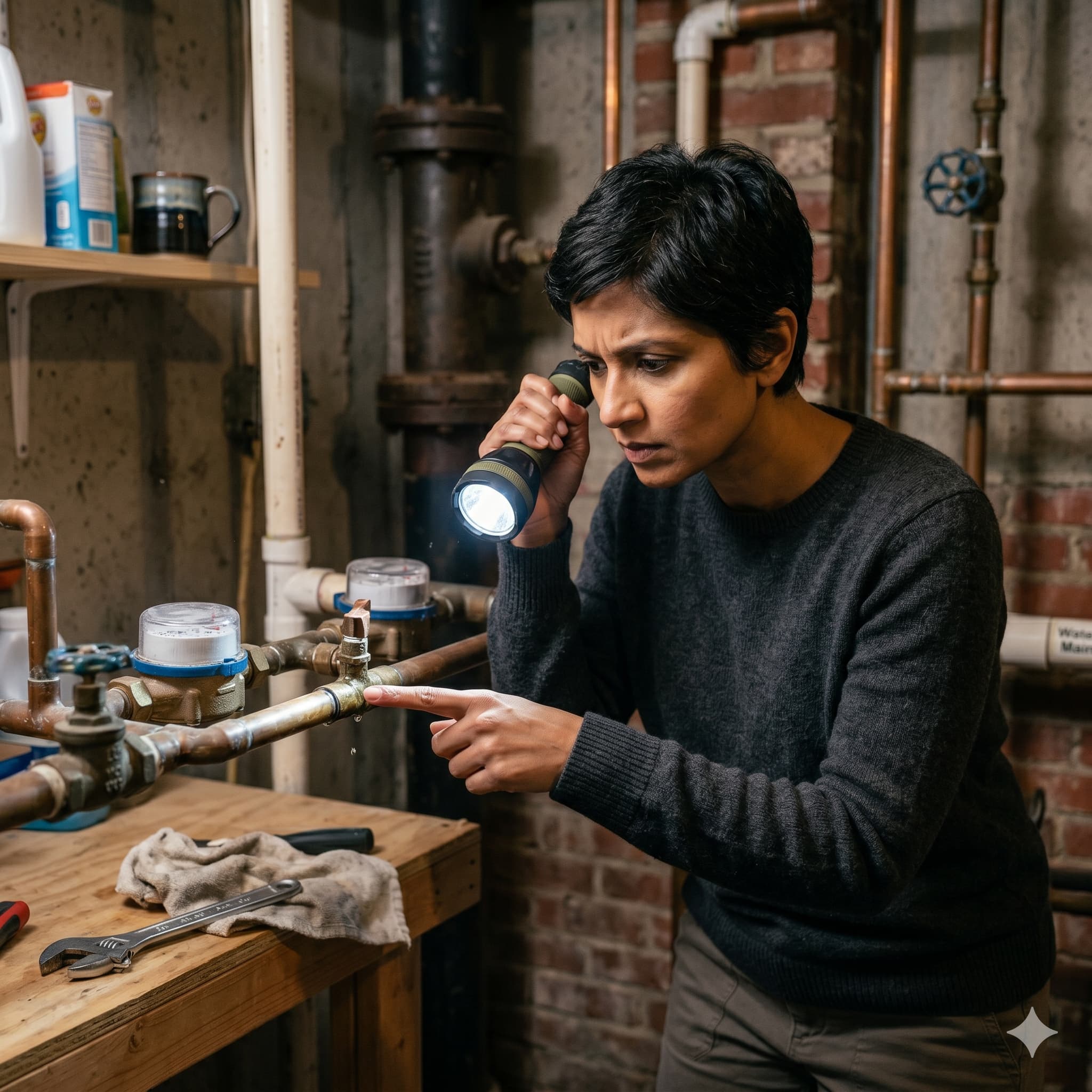
Water spreads at roughly one gallon per minute from a burst household pipe. In one hour, that is 60 gallons soaking into your walls, floors, and subfloor.
The difference between a $2,000 repair and a $15,000 remediation often comes down to how quickly you cut the water and what you do in the next 30 minutes.
Most homeowners lose four to eight minutes because they do not know where their main shutoff is or what to do after they find it. This is the sequence.
> Knowing the location of your main water shutoff before a pipe bursts is one of the highest-value pieces of home knowledge you can have. Walk to it right now, while nothing is wrong, and confirm you can close it within 30 seconds.
Once the immediate flooding is handled, the repair itself can still be a real financial hit. USA.gov’s home-repair programs page lists legitimate assistance options, and HUD’s home improvements page summarizes what federal programs actually cover.
Step 1: Cut the Water Immediately
Your main water shutoff valve controls water flow to the entire house. In most homes it’s in one of these places: in the basement near the front foundation wall, in a utility closet near the water heater, outside near the water meter, or in a crawl space below the first floor.
Turn it clockwise to close. If it is a ball valve with a lever handle, rotate it 90 degrees so the handle is perpendicular to the pipe. However, if the valve is stuck because of no operations in years, call your water utility’s emergency line. They can shut off flow at the street meter.
Once you cut the water, open the lowest faucet in the house, typically a basement or outdoor spigot, to drain remaining pressure from the pipes. This reduces how much water continues to flow from the break point even after closing the main valve.
Step 2: Cut Power to Affected Areas
Water and electricity are an immediate life-safety combination. If water is anywhere near electrical outlets, appliances, a panel box, or exposed wiring, go to your breaker panel and cut power to those areas before entering the space.
If you are not certain which breakers cover the affected areas, shut off the main breaker. While this may seem like an overreaction, insurance adjusters see electrical fires by water intrusion more often than most homeowners would expect.
Do not enter standing water while power is on in the space: this rule has no exceptions.
Step 3: Document Before You Touch Anything
Before you move furniture or start removing wet materials, photograph everything.
Walk every affected room. Capture the break point, standing water, water marks on walls, wet flooring, and any personal property in the water.
This documentation is the foundation of your insurance claim. Adjusters estimate based on what you can show them, and photos taken before cleanup are far more useful than ones taken after.
Leave your phone’s automatic timestamp on or use video with audio narration to capture the scope.
Call your homeowners insurance company while you are still documenting. Most carriers have 24-hour claims lines.
The sooner the claim is open, the sooner an adjuster can be dispatched, and in serious water damage cases, the sooner a remediation team is authorized.
> Start the insurance claim before you begin cleanup. Adjusters can deny claims when damage has been disturbed before they inspect it. A quick call while you are still photographing preserves the full record.
Step 4: Begin Water Removal Immediately
Standing water causes structural damage within hours. Mold growth begins within 24 to 48 hours of moisture exposure. You do not need to wait for a professional to start removing water.
Use a wet-dry vacuum to pull standing water from hard floors. Remove rugs, throw blankets, and soft furnishings from the wet area. Open windows if outdoor conditions allow. Run fans and portable dehumidifiers to begin drying the space.
Lift carpet from the tack strips and pull it back to expose the subfloor. A wet subfloor that is not dried within 24 to 48 hours often requires full replacement. Drying it quickly is significantly cheaper than replacing it.
Do not use a regular household vacuum for water removal. Do not attempt to dry wet walls or flooring with a hair dryer. Do not run fans blowing toward remaining standing water, as that spreads moisture to unaffected areas.
Step 5: Call a Licensed Plumber for the Repair
Once the water is off and the immediate safety steps are complete, call a licensed plumber to diagnose and repair the break.
An emergency service call on a weekend or holiday will cost more than a standard call, but attempting a DIY pipe repair on a burst line, especially in a finished wall, often makes the eventual repair more expensive.
Give the plumber as much information as possible: where you first noticed water, which shutoff you used, whether the break point is visible or behind a wall. The faster they can localize the problem, the lower your labor cost.
For guidance on what to expect from a contractor and how to be prepared financially, see What to Do When a Home Repair Goes Wrong and How to Build an Emergency Fund That Covers Home Repairs.
Questions Homeowners Ask
- What should you do when a home repair goes wrong?
- How do you build an emergency fund for home repairs?
- What maintenance keeps your water heater working longer?