

9 min read · Last updated August 10, 2026
- A home warranty is a one-year service contract, not an insurance policy you continue, so every renewal is a fresh purchase decision at a new price.
- The number that decides it is what the company actually paid out on your covered items last year, compared against next year’s premium plus one service fee.
- In the worked example below, the company funded $595 of repairs against $924 in premium and service fees, and the renewal quote needs $917 of payouts just to break even.
- Arizona’s Attorney General announced an $11.8 million settlement with Choice Home Warranty in February 2026, after more than 1,500 state complaints since 2013 alleging undisclosed exclusions.
In this article
- A renewal is a new purchase, not a continuation
- The only number that decides it
- The worked recovery calculation on one contract year
- What regulators found buyers were not being told
- Frequently asked questions
Marcus paid $624 for a home warranty on his 1994 three-bedroom outside Knoxville, filed three claims in twelve months, and got two of them covered. The renewal quote arrived at $792, up 27%, with the per-visit service fee rising from $100 to $125. He is about to renew it for the same reason most people do, which is that cancelling feels like betting against his own furnace. That instinct is the expensive part.
A renewal is a new purchase, not a continuation
Start with what the product legally is, because the framing changes the decision.
The District of Columbia Attorney General’s consumer alert states it directly: home warranties are not insurance policies, they are service contracts, and a home warranty is “a one-year service agreement” covering repair or replacement of some home systems and appliances. The office also notes that a basic home warranty “can be expensive, costing $500 per year or more,” and that every year, one of the most frequent complaints consumers make is about home warranty companies.
One year. That matters. You are not maintaining continuous coverage the way you would with a homeowners policy, where a lapse creates a real gap and a black mark when you shop. When a home warranty contract ends, nothing about your house changes. You are simply deciding whether to buy a new twelve-month contract at whatever price is now on the table.
So the question is not “should I cancel.” It is “would I buy this, at $792, knowing what I know now.” Those get different answers.
The only number that decides it
At purchase, you had no information about your own house. You bought on averages and on what a repair could theoretically cost. That is a genuinely hard decision to make well, which is why the break-even math against a self-funded repair fund is the right way into it the first time.
At renewal you have something much better: twelve months of data about your specific appliances, your specific contract’s exclusions, and your specific company’s willingness to pay.
Most homeowners never compute the one figure that summarizes it. Call it your realized recovery: what the company actually paid out on your behalf, minus what you paid in premium and service fees. Not what a repair would cost retail. Not what a new HVAC system costs. What the company funded.
That number is in your own records. Every service call has an invoice showing what the contractor billed and what you paid. Add up the company’s side for the twelve months, then set it against your premium plus your service fees. The comparison takes fifteen minutes and it is the most useful thing you can do before answering a renewal notice.
The worked recovery calculation on one contract year
Here is Marcus’s year one, with every input named so you can run yours the same way.
What he paid in. Premium $624 for the year, which is $52 a month. Service call fee $100 per visit. Three visits, so $300 in fees. Total paid in: $924.
What the company paid out. Claim one, the dishwasher would not drain. Covered. The technician replaced the pump on a $410 repair, of which Marcus paid his $100 service fee and the company funded the remaining $310. Claim two, the garbage disposal seized. Covered and replaced on a $385 job, another $100 fee from Marcus and $285 from the company. Total funded by the company: $310 plus $285 is $595.
Claim three, which is the one that matters. The condenser fan motor on his air conditioning unit failed in July. The claim was denied as improper maintenance. He paid the $100 service fee anyway for the visit that produced the denial, and then $640 out of pocket to a local contractor to fix it.
The realized recovery. $595 paid out against $924 paid in leaves him $329 behind on the year, before counting the denial. Adding the $640 he had to fund himself on the one failure he actually bought the contract for, he is $969 behind.
Now test the renewal against that. Year two is $792 plus a service fee that has gone to $125. One service call and he has committed $917. For the renewal to pay off, the company has to fund more than $917 of covered repairs. Last year it funded $595. He needs year two to deliver a covered failure roughly $322 larger than everything year one produced combined.
Could that happen? Certainly. A compressor or a water heater would clear it easily. But notice what his own data says about the odds: the one large failure he had was the one that got denied, and the two claims that paid were a $310 pump and a $285 disposal. He is not being asked to bet on whether something expensive breaks. He is being asked to bet that when it does, this company pays.
| Factor | Renew at $792 | Drop it and self-fund | Switch providers |
|---|---|---|---|
| What you commit in year two | $792, plus $125 per service call | $0, but you carry every repair | A new premium, plus a new waiting period |
| What has to happen to come out ahead | More than $917 of covered repairs | Fewer than about $800 of repairs | Same math, at the new company’s price |
| What year one’s data says | The company funded $595 | You funded $1,564 in total outlay | Untested, and your appliances are a year older |
| The main risk | The big failure is the one most likely to be argued | A compressor or water heater in a bad month | Pre-existing condition and improper maintenance clauses reset against you |
| Best for | Homes where the company paid a large claim without a fight | Anyone with the reserve, especially after a denial on a major system | Only after reading the new exclusion list line by line |
What regulators found buyers were not being told
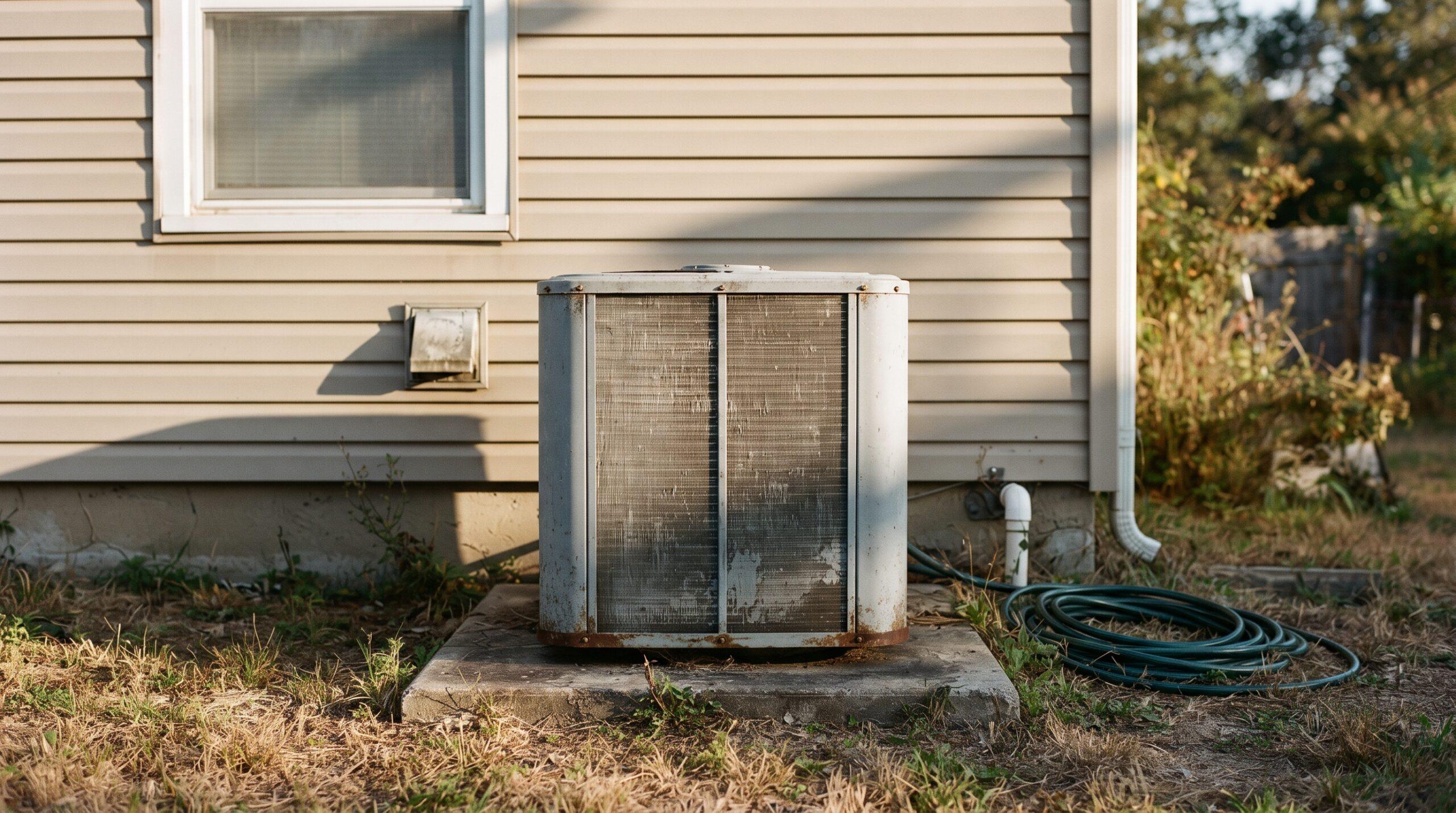
Marcus’s denial is not an unlucky outlier, and this is where the renewal decision gets its second input.
In February 2026, Arizona’s Attorney General announced an $11.8 million settlement with Choice Home Warranty, the largest with a home warranty company in the state’s history, on a judgment entered January 23, 2026. The state had sued in 2019 after being inundated with complaints that the company failed to replace air conditioning units and other appliances it had advertised as covered. Since 2013, more than 1,500 Arizona customers had complained to the Attorney General, the state’s Department of Insurance and Financial Institutions, and the Better Business Bureau. The office’s finding on the pattern is the useful part for you: customers frequently reported that telephone sales representatives “failed to disclose various exclusions and limitations that undermined the value of the warranty product,” or misrepresented what would be covered. The settlement requires reformed sales practices and meaningful disclosure before a sale. The company denies the allegations and admitted no wrongdoing.
The scale is not one company or one state. An InvestigateTV analysis of complaints filed with the Federal Trade Commission, 25 state regulators and the Better Business Bureau found thousands of complaints since 2019, including more than 1,500 to the Texas Attorney General, more than 800 in Tennessee and nearly 700 in Illinois. The same investigation followed a Louisiana homeowner whose annual fee climbed from $700 to more than $2,400, reaching nearly $2,500 by August 2024, and who spent more than 100 hours on the phone over a single air conditioning claim.
One detail from that reporting is worth carrying into your own claim file. When the company finally sent him a partial settlement check, it had written the release onto the check itself: by cashing it, he would be acknowledging that the company had fulfilled its obligation on that item. He has been sitting on it rather than deposit it.
None of this means every contract is a bad buy. It means the thing you are buying is the company’s claims behavior, not the coverage list, and your own twelve months is better evidence of that than any advertisement. If your renewal is a decision you are making cold, the two places to look first are what these contracts actually cost across the market and the specific clauses that get claims denied.
Frequently asked questions
Is a home warranty renewal price negotiable?
Often, yes. Retention departments frequently have authority to hold the prior year’s rate or waive a fee increase, particularly if you say plainly that you are comparing the renewal against dropping the contract. Ask for the prior price in writing before you agree, and confirm the service fee separately, since that is where increases hide.
How do I calculate whether my renewal is worth it?
Add your premium and all service fees for the past twelve months. Add what the company actually paid contractors on your covered claims. If the payouts are lower, the contract cost you money. Then check whether next year’s premium plus one service fee is a number your realistic failures would exceed.
Does cancelling a home warranty create a coverage gap?
No, not in the way an insurance lapse does. A home warranty is a one-year service contract, so when it ends nothing about your house or your other coverage changes. The practical cost of a gap is that a new contract elsewhere may impose a waiting period and treat existing problems as pre-existing.
Why was my air conditioning claim denied for improper maintenance?
Most contracts exclude failures they attribute to inadequate maintenance, and the company’s own technician usually makes that determination. Keep dated service records and receipts for annual tune-ups. Documentation is the main defense, and it has to exist before the claim, not be reconstructed after a denial.
Are home warranty companies regulated like insurers?
Generally no. Regulators treat these as service contracts rather than insurance, so oversight varies widely by state and is usually lighter than insurance regulation. That is why state Attorneys General, rather than insurance departments, have brought the largest recent enforcement actions in this industry.
Should I switch providers instead of renewing?
Only after reading the new contract’s exclusions line by line. Switching resets pre-existing condition and improper maintenance language against a house that is now a year older, and it usually restarts a waiting period. A lower headline premium with a broader exclusion list is not a better deal.